Brahmvidya Shastra and Nav Prakar...
🙏 Dandvat Pranam 🙏
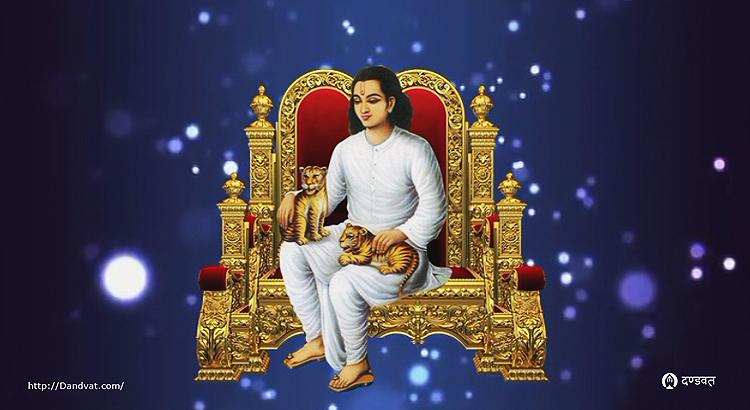
Brahmvidya Shastra, It is a collection of main vachans (sutras) of Swami Shree Chakardhara and presents the philosophical core of Mahanubhav Pantha. Very well planned and carefully organized into various sections, it is revered as our Shastra mop Parmeshwar (God in the form of scripture).
Compiled with great care and understanding (in 1290) by the knowledgeable Keshav Vyas Suri from amongst 1500 episodes in the sacred source book Leela Charitra, is the second sacred book Brahmvidya Shastra.
The Brahmvidya Shastra gives minute details of four elements (Char Paddarths- Ishwar, Devta, Jeev & Prapanch), Gods and the varied knowledge, way and source of attaining them. Nav Prakaran means nine chapters. Excluding the background chapter of Poorvi (along with Panch Krishna and Panch Naam).
Nav Prakaran:
🚩 Anya Vyavriti – अन्य व्यावृति (देवता पदार्थ)
🚩 Yug Dharma – युगधर्म
🚩 Vidya Marg – विद्या मार्ग
🚩 Sanhaar – संहार (प्रलय)
🚩 Sansaran – संसरण (रचना)
🚩 Udharan – उद्धरण
🚩 Mahavakya – महावाक्य
🚩 Nirvachan – निर्वचन
🚩 Astipari – असतिपरि
Other parts of Brahmvidya are Vichar Prakaran and Achar Prakaran. There are 285 sutras under Vichar Prakaran and 289 sutras under Achar Prakaran. Keshav Vyas Suri also selected from Leela Charitra 114 drishtants (illustrations) which were narrated by Swami to elaborate some deep philosophical thought. If this is included, Nav Prakaran becomes Dasham Prakaran.
🙏 जय श्री कृष्ण जी 🙏
Mahasthan Sarpadwaypathan Sthan, ...
🙏 Dandvat Pranam 🙏
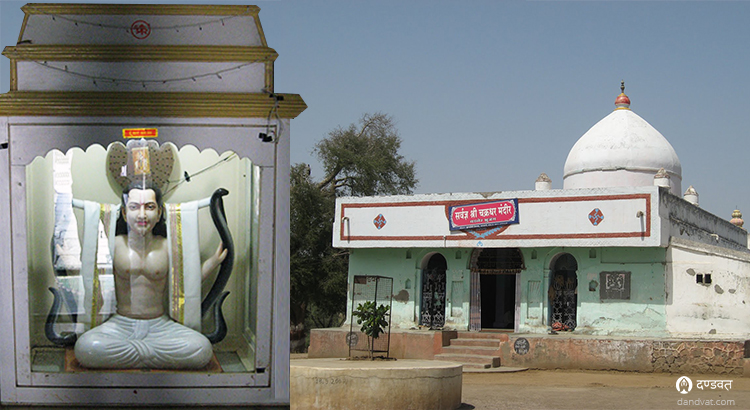
Mahasthan Sarpadwaypathan Sthan (Wadner-Bhujang) सर्पद्वयपतन स्थान (वडनेर-भुजंग) as all of the Mahanuvhava Panth members know that Sarpadwaypathan Sthan is the one of the Mahasthan in our culture. Sarpadwaypathan Sthan is at the north direction of the Anjangaon – Kakada road at Wadner-Bhujang village. The leela is explained below.
Bhagwan Sarvadnya Shree Chakradhar Swami Ji came from Achapur town via Katesokarne to Wadner village. Swami Ji came here at evening time. Sawami Ji was going to Wateshwar temple to have a sleep. At the same time, the Priest was returning from the temple after the worship. The Priest told Sarvadnya that the temple has been locked to save the ornaments from the theft, so he asked Sarvadnya that he can sleep at the Uttareshwar temple opposite side of the road.
So Swami Ji came at this temple. There were 2 snakes living at the temple who were bitter enemies to each other. At mid night, when Sarvadnya was in between sleep snakes were fighting with each other. Suddenly both of them had fallen on Swami Ji’s chest while fighting with each other. Then Sarvadnya held those 2 snakes in both the hands and make them apart by throwing the Snake at right side to the left and the snake at Left side to the Right. Since that time, those 2 snakes stayed there leaving all the hate and disputes. At this Mahasthan temple, there is a beautiful idol of Sarvandnya Shree Chakradhar Swami Ji holding the two snakes in both the hands.
Sarvadnya Shri Chakradhar Temple:
▫️ Sarpadway Patan Sthan, Anjangaon - Kakada Road,
▫️ Village: Wadner-Bhujang, Block: Achalpur,
▫️ District: Amravati, State: Maharashtra, India
🙏 जय श्री कृष्ण जी 🙏
What is Karma: Action or Deed
🙏 Dandvat Pranam 🙏
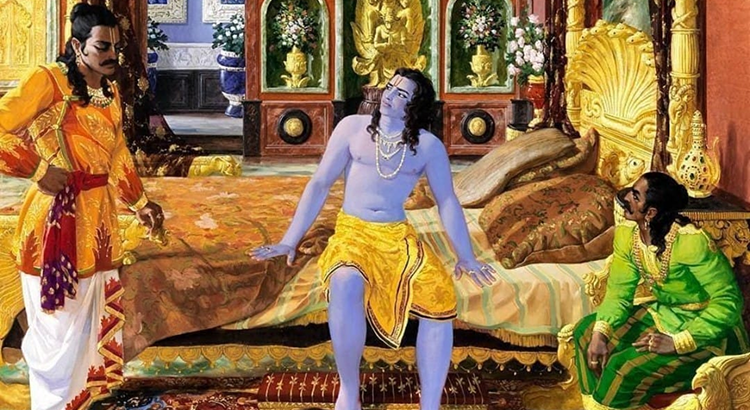
Karma is a Sanskrit term. It means action or deed. Any physical or mental action is Karma. Thinking is mental Karma. Karma is the sum total of our acts, both in the present life and in the preceding births.
Karma means not only action, but also the result of an action. There is a hidden power in Karma or action termed 'Adrishta' which brings in fruits of Karmas for the individual. The consequence of an action is really not a separate thing. It is a part of the action and cannot be divided from it.
According to the Gita, any action done with Nishkamya Bhava (selflessness) is Karma.
Lord Krishna says: Work incessantly. Your duty is to work but not to expect the fruits thereof. The central teaching of the Gita is non-attachment to work. Breathing, eating, seeing, hearing, thinking, etc., are all Karmas. Thinking is real Karma. Raga-dvesha (likes and dislikes) constitute real karma.
🙏 जय श्री कृष्ण जी 🙏
Recalling the name is the way to ...
🙏 Dandvat Pranam 🙏
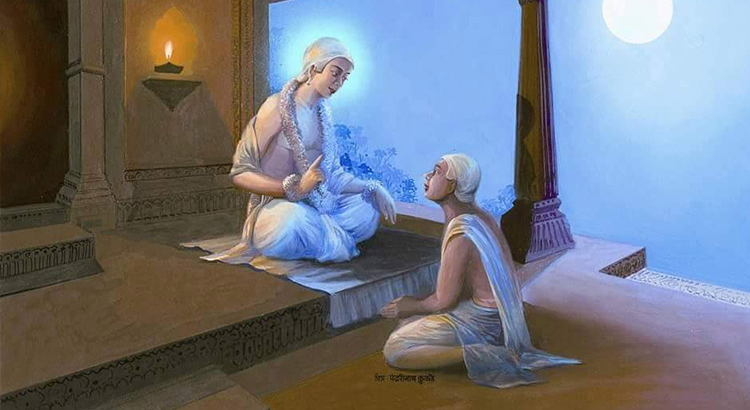
During the times, when Sarvadnya Shree Chakradhar Swami Ji was residing in Khudkuli. At the dawn Swami Ji was in meditation portrait, at that moment Nagdev Ji asked the lord “Please give me the way to attain parmeshwar; Give me the process to chant parmeshwar; Give me the way to remember parmeshwar since I don’t have anything to remember the parmeshwar”.
After the hankering urge of Nagdev. Swami Ji said. Contemplation is generated only from the depth of soul. You must remember him every day. Every day you must chant the name. On this, Nagdev Ji asked. How the process should be. How I can learn this. To make the doubt clear, Swami Ji said, Recall the first four names during day and night time, but the fifth name must be recalled all the times.
10 reasons why we meditate
🚩 वेध – Perforation
🚩 बोध – Comprehension
🚩 अनुसरण – Pursuance
🚩 स्मरण – Remembrance
🚩 सभी निग्रहों का परिहार – Avoidance of all constraints
🚩 चरों ओर से आने वाले महद भूतों के कष्टों का निवारण – Redress the suffering of ghosts from all direstions
🚩 बिजली गिरने के समान दुखों का दूर करना – Removal of the restriction like lightning
🚩 सभी प्रकार से सहायता करना – To assist with all types
🚩 और परमेश्वर प्राप्ति करना – And to receive the parmeshwar
🚩 सभी प्रकार के आधिदैविक अधिभौतिक एवं आध्यत्मिक विघ्न कष्टों से बचाना – Lord save from the metaphysical, spiritual sufferings of all sorts of obstacles
With these ways and the goals, you can attain the divine spirit. never forgot the names. While standing, sitting, sleeping, eating, drinking, walking you must recall the names. On this, Mahadaisa asked the Lord. Prabhu ji, we will meditate about you. But, for whom you do meditation. Sarvadnya replied, i do meditation for the welness of all the souls and beside this i do remind about the moment when my Guru Shree Gundam Raul ji slaped me with his love.
चक्रधर स्वामीजी ने कहा इसी प्रकार पञ्च कृष्ण अवतारों के स्मरण के बाद अपने अपने गुरु निमित की भी याद करनी चाहिए। वेध गुरु, उपदेश गुरु, बोध गुरु, शाश्त्र उद्देश्य गुरु, दीक्षा देत गुरु एव अनेक प्रकार के गुरु निमितों को याद करना चाहिए।
नाम स्मरण ही उद्धार है। - Name recall is salvation.
नाम स्मरण से ही कल्याण है। - Remember the name for well-being.
नाम स्मरण ही मोक्ष का आधार है। - Recalling the name is the way to salvation.
🙏 जय श्री कृष्ण जी 🙏
Theory of Swami Shree Chakardhara...
🙏 Dandvat Pranam 🙏
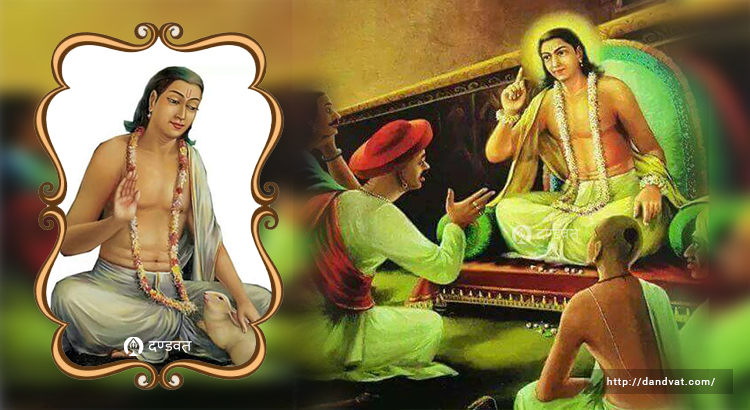
Swami Shree Chakardhara depicted a theory about Karma, whatever we perform daily is a Karma. Jeevs are naturally a doer, Jeevs can’t even rest a while without doing a deed. Jeevs are very helpless by his nature and too much strong if he remembers who is his Parmeshwara.
Swami Ji’s theory is well explained and clear about the Karma. According to Swami Ji, Karmas are not always physically performed. Sometimes karmas are our thoughts and words also. Jeevs are doing karmas every second, even in any form like talking, walking, sleeping, eating, thinking and all the basic activites.
Origin of Karmas It has already been explained that in the first three creations, the jeevs prepared for the performance of deeds and in the fourth creation the deeds performed became rewardable. Now, in this the role of Devtas began. Devtas are ordered to give rewards to the jeevs. Since jeev can't reward himself so Devtas as an examiner takes charge to reward the Jeevs, but on the top, the Parmeshwara is holding the charge of Principal. Only by his grant, the Devtas give rewards to Jeevs, positive or negative both by deeds.
Three stages of Karmas Swami Ji explained the cause of Karmas and now he is explaining the three stage of Karmas. A single karma is performed by a process. These stage of Karmas are:
1️⃣ Thinking: This is the very first process, whatever jeevs want to perform, he thinks for that.
2️⃣ Speaking: After thinking and assuming, Jeevs secondly speak for that.
3️⃣ Acting: Very last, after speaking jeevs act for that physically.
Since all the karmas are performed by jeevs, but there is a hidden force working inside. The hidden force have coated a layer of dust on the jeevs. Actually, the karmas are the bondages and the real hurdle in the path of liberation. Jeevs can’t attain bliss without leaving the greed of karma.
🙏 जय श्री चक्रधर जी 🙏
🙏 जय श्री कृष्ण जी 🙏
5000 years ago in the battlefield...
🙏 Dandvat Pranam 🙏
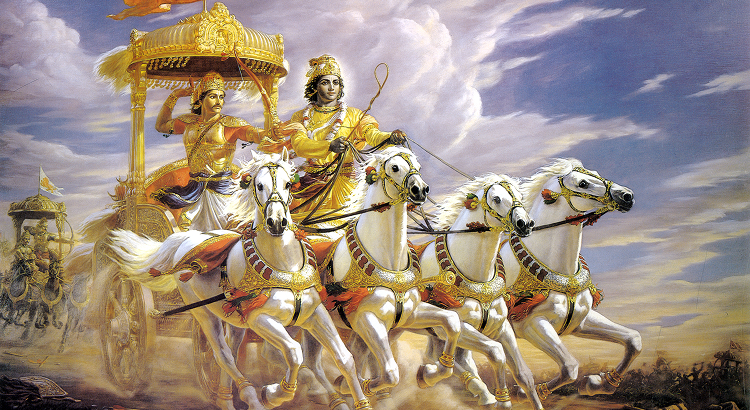
The Divine song I love the most of Supreme Lord Krishna which everyone must remember. Bhagvad means God & Gita means Song. So it is song of divine himself. 5000 years ago in the battlefield of Kurukshetra Prabhu Shree Krishna himself sang the greatest philophical song for all humankind. And its not the first time he sang it billions of years ago he sang it to sun god vivasana.
ईश्वरीय गीत मुझे सबसे ज्यादा प्रिय है सर्वोच्च भगवान कृष्ण जो कि हर किसी को याद होने चाहिए। भगवद् का अर्थ है भगवान और गीता का अर्थ है गीत। इसलिए यह स्वयं परमात्मा का गीत है। 5000 साल पहले कुरुक्षेत्र के युद्ध के मैदान में स्वयं प्रभु श्री कृष्ण ने सभी मानव जाति के लिए सबसे बड़ा फिलोफिकल गीत गाया था। और यह पहली बार नहीं है जब उन्होंने इसे अरबों साल पहले गाया था, उन्होंने इसे सूर्य देवता के लिए गाया था।
The reason Krishna comes to the material world is specifically to re-establish the real purpose of life when mankind in general has forgotten this purpose. Krishna is very merciful to us, it is out of His mercy that He spoke the Bhagavad-gita, making His friend Arjuna the first student.
कृष्ण भौतिक दुनिया में आने का कारण विशेष रूप से जीवन के वास्तविक उद्देश्य को फिर से स्थापित करना है जब सामान्य रूप से मानव जाति इस उद्देश्य को भूल गई है। कृष्ण हमारे लिए बहुत दयालु हैं, यह उनकी दया से बाहर है कि उन्होंने भगवद् गीता बोली, अपने दोस्त अर्जुन को पहला छात्र बनाया।
🙏 जय श्री कृष्ण जी 🙏