
💎 Quotes
Sharing some facts and knowledge from Shreemad Bhagwad Geeta
वासुदेव श्री कृष्ण - Voice of Vasudev Shree Krishna
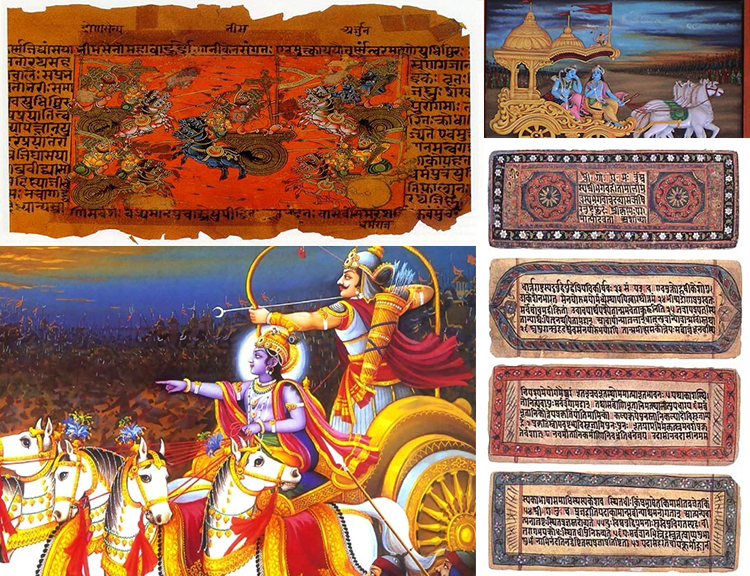
The Five incarnations - Panch Krishna Avatar
Here are few quotes from the Shreemad Bhagavad Gita, our Panch Krishna Avatar's and literature of Mahanubhava Pantha.
Sanskrit: नैनं छिन्दन्ति शस्त्राणि नैनं दहति पावकः। न चैनं क्लेदयन्त्यापो न शोषयति मारुतः॥
Hindi: आत्मा को न शस्त्र काट सकते हैं, न आग जला सकती है, न जल भिगो सकता है और न ही वायु सुखा सकती है।
English: Weapons cannot shred the soul, nor can fire burn it. Water cannot wet it, nor can the wind dry it.
Sanskrit: न जायते म्रियते वा कदाचिन्
Hindi: आत्मा न कभी जन्म लेती है और न कभी मरती है।
English: The soul is neither born, nor does it ever die.
Sanskrit: वासांसि जीर्णानि यथा विहाय
Hindi: जैसे मनुष्य पुराने वस्त्रों को त्यागकर नए वस्त्र धारण करता है, वैसे ही आत्मा पुराने शरीर को त्यागकर नए शरीर में प्रवेश करती है।
English: As a person puts on new garments, giving up old ones, the soul similarly accepts new material bodies, giving up the old and useless ones.
Sanskrit: देहिनोऽस्मिन्यथा देहे कौमारं यौवनं जरा
Hindi: जैसे जीवात्मा इस शरीर में कुमार, युवा और वृद्धावस्था को प्राप्त करती है, वैसे ही वह मृत्यु के पश्चात दूसरे शरीर को प्राप्त करती है।
English: As the embodied soul continuously passes from childhood to youth to old age, the soul similarly passes into another body at death.
Sanskrit: अच्छेद्योऽयमदाह्योऽयमक्लेद्योऽशोष्य एव च
Hindi: यह आत्मा अखंडनीय, अदहनीय, अक्लेद्य और अशोष्य है। यह नित्य, सर्वव्यापी, स्थिर और सनातन है।
English: This soul is unbreakable and incombustible; it can neither be dampened nor dried. It is everlasting in all places, unalterable, and immutable.
Sanskrit: कर्मण्येवाधिकारस्ते मा फलेषु कदाचन। मा कर्मफलहेतुर्भूर्मा ते सङ्गोऽस्त्वकर्मणि॥
Hindi: तेरा अधिकार केवल कर्म करने पर है, उसके फल पर कभी नहीं। फल की इच्छा से कर्म मत कर।
English: You have a right to perform your prescribed duties, but you are not entitled to the fruits of your actions.
Sanskrit: योगस्थः कुरु कर्माणि सङ्गं त्यक्त्वा धनञ्जय
Hindi: हे धनंजय! आसक्ति का त्याग कर सिद्धि और असिद्धि में समान भाव रखकर योग में स्थित होकर कर्म करो।
English: Perform your duty equipoised, O Arjuna, abandoning all attachment to success or failure. Such equanimity is called Yoga.
Sanskrit: योगः कर्मसु कौशलम्।
Hindi: योग ही कर्मों में कुशलता है।
English: Yoga is excellence in action.
Sanskrit: नियतं कुरु कर्म त्वं कर्म ज्यायो ह्यकर्मणः
Hindi: तुम अपना नियत कर्म करो, क्योंकि अकर्म से श्रेष्ठ कर्म करना है।
English: Perform your prescribed duty, for doing so is better than not working.
Sanskrit: तस्मादसक्तः सततं कार्यं कर्म समाचर
Hindi: आसक्ति रहित होकर निरंतर कर्तव्य कर्म को करो।
English: Therefore, without being attached to the fruits of activities, one should act as a matter of duty.
Sanskrit: उद्धरेदात्मनात्मानं नात्मानमवसादयेत्
Hindi: मनुष्य को चाहिए कि अपने मन के द्वारा अपना उद्धार करे, अपने को नीचे न गिराए।
English: One must deliver himself with the help of his mind, and not degrade himself.
Sanskrit: बन्धुरात्मात्मनस्तस्य येनात्मैवात्मना जितः
Hindi: जिसने मन को जीत लिया है, मन उसका मित्र है; जिसने ऐसा नहीं किया, मन उसका शत्रु है।
English: For him who has conquered the mind, the mind is the best of friends; but for one who has failed to do so, his mind will remain the greatest enemy.
Sanskrit: असंशयं महाबाहो मनो दुर्निग्रहं चलम्
Hindi: हे महाबाहु! निस्संदेह मन चंचल है और इसे वश में करना कठिन है, लेकिन अभ्यास और वैराग्य से इसे वश में किया जा सकता है।
English: O mighty-armed son of Kunti, it is undoubtedly very difficult to curb the restless mind, but it is possible by constant practice and by detachment.
Sanskrit: ध्यायतो विषयान्पुंसः सङ्गस्तेषूपजायते
Hindi: विषयों का चिंतन करने से उनमें आसक्ति पैदा होती है, आसक्ति से कामना और कामना से क्रोध पैदा होता है।
English: While contemplating the objects of the senses, a person develops attachment for them, and from such attachment lust develops, and from lust anger arises.
Sanskrit: क्रोधाद्भवति सम्मोहः सम्मोहात्स्मृतिविभ्रमः
Hindi: क्रोध से मोह पैदा होता है, मोह से स्मृति भ्रमित होती है, और बुद्धि नष्ट होने से मनुष्य का पतन हो जाता है।
English: From anger comes clouding of judgment, from clouding of judgment comes loss of memory, and with the loss of memory, the intellect is destroyed; and with the loss of intellect, one perishes.
Sanskrit: अनन्याश्चिन्तयन्तो मां ये जनाः पर्युपासते
Hindi: जो अनन्य भाव से मेरा चिंतन करते हैं, उनके योग-क्षेम का भार मैं वहन करता हूँ।
English: For those who are always absorbed in thoughts of Me, I carry what they lack and preserve what they have.
Sanskrit: सर्वधर्मान्परित्यज्य मामेकं शरणं व्रज
Hindi: सब धर्मों को त्यागकर केवल मेरी शरण में आओ। मैं तुम्हें सब पापों से मुक्त कर दूँगा।
English: Abandon all varieties of religion and just surrender unto Me. I shall deliver you from all sinful reactions.
Sanskrit: पत्रं पुष्पं फलं तोयं यो मे भक्त्या प्रयच्छति
Hindi: जो कोई प्रेम से मुझे पत्र, पुष्प, फल या जल अर्पित करता है, उसे मैं स्वीकार करता हूँ।
English: If one offers Me with love and devotion a leaf, a flower, fruit or water, I will accept it.
Sanskrit: अहं सर्वस्य प्रभवो मत्तः सर्वं प्रवर्तते
Hindi: मैं समस्त उत्पत्ति का स्रोत हूँ, सब कुछ मुझ से ही प्रवर्तित होता है।
English: I am the source of all spiritual and material worlds. Everything emanates from Me.
Sanskrit: यदा यदा हि धर्मस्य ग्लानिर्भवति भारत
Hindi: जब-जब धर्म की हानि होती है, तब-तब मैं अवतार लेता हूँ।
English: Whenever there is a decline in righteousness, O Bharat, and a rise in unrighteousness, at that time I manifest Myself.
Sanskrit: दुःखेष्वनुद्विग्नमनाः सुखेषु विगतस्पृहः
Hindi: जो दुखों में विचलित नहीं होता और सुखों की लालसा नहीं करता, वह स्थिर बुद्धि वाला मुनि कहलाता है।
English: One whose mind remains undisturbed amidst misery, and who does not crave for pleasure, is called a sage of steady intellect.
Sanskrit: विद्याविनयसम्पन्ने ब्राह्मणे गवि हस्तिनि
Hindi: ज्ञानी पुरुष विद्यावान ब्राह्मण, गाय, हाथी, कुत्ते और चांडाल को समान दृष्टि से देखते हैं।
English: The humble sages, by virtue of true knowledge, see with equal vision a learned and gentle brahmana, a cow, an elephant, a dog and a dog-eater.
Sanskrit: या निशा सर्वभूतानां तस्यां जागर्ति संयमी
Hindi: जो सब प्राणियों के लिए रात है, उसमें संयमी पुरुष जागता है।
English: What is night for all beings is the time of awakening for the self-controlled.
Sanskrit: इहैव तैर्जितः सर्गो येषां साम्ये स्थितं मनः
Hindi: जिनका मन समता में स्थित है, उन्होंने यहीं जन्म-मृत्यु को जीत लिया है।
English: Even in this life, the cycle of birth and death is conquered by those whose minds are established in equanimity.
Sanskrit: त्रिविधं नरकस्येदं द्वारं नाशनमात्मनः
Hindi: नरक के तीन द्वार हैं— वासना, क्रोध और लोभ।
English: There are three gates leading to the hell of self-destruction for the soul—lust, anger, and greed.
Sanskrit: विहाय कामान्यः सर्वान्पुमांश्चरति निःस्पृहः | निर्ममो निरहङ्कारः स शान्तिमधिगच्छति ||
Hindi: जो मनुष्य सभी इच्छाओं को त्याग देता है और ममता रहित, अहंकार रहित होकर विचरण करता है, वह शांति प्राप्त करता है।
English: One who abandons all desires and moves without attachment, free from sense of ownership and ego, attains peace.
Sanskrit: श्रद्धावाँल्लभते ज्ञानं तत्परः संयतेन्द्रियः | ज्ञानं लब्ध्वा परां शान्तिमचिरेणाधिगच्छति ||
Hindi: श्रद्धा रखने वाला मनुष्य, अपनी इन्द्रियों को वश में करके ज्ञान प्राप्त करता है, और ज्ञान प्राप्त होते ही वह परम शांति को प्राप्त होता है।
English: The faithful man who is dedicated to knowledge and who subdues his senses attains supreme peace without delay.
Sanskrit: श्रेयान्स्वधर्मो विगुणः परधर्मात्स्वनुष्ठितात् | स्वभावनियतं कर्म कुर्वन्नाप्नोति किल्बिषम् ||
Hindi: अच्छी तरह आचरण किए हुए दूसरे के धर्म (कर्तव्य) से, गुणरहित अपना धर्म श्रेष्ठ है। स्वभाव के अनुसार कर्म करने वाले को पाप नहीं लगता।
English: It is better to perform one’s own duty imperfectly than to master the duty of another. By doing duty prescribed by one's own nature, one incurs no sin.
Sanskrit: न प्रहृष्येत्प्रियं प्राप्य नोद्विजेत्प्राप्य चाप्रियम् | स्थिरबुद्धिरसम्मूढो ब्रह्मविद्ब्रह्मणि स्थितः ||
Hindi: जो प्रिय वस्तु को पाकर हर्षित नहीं होता और अप्रिय को पाकर विचलित नहीं होता, वह स्थिर बुद्धि वाला व्यक्ति ब्रह्मवेत्ता है।
English: A person who neither rejoices upon achieving something pleasant nor laments upon obtaining something unpleasant is steady in mind and self-situated in God.
Sanskrit: प्रकृतेः क्रियमाणानि गुणैः कर्माणि सर्वशः | अहङ्कारविमूढात्मा कर्ताहमिति मन्यते ||
Hindi: समस्त कर्म प्रकृति के गुणों द्वारा किए जाते हैं, लेकिन अहंकार से मोहित अंतःकरण वाला अज्ञानी मानता है कि मैं कर्ता हूँ।
English: All activities are carried out by the three modes of material nature, but the soul deluded by ego thinks, I am the doer.
Sanskrit: इति ते ज्ञानमाख्यातं गुह्याद्गुह्यतरं मया | विमृश्यैतदशेषेण यथेच्छसि तथा कुरु ||
Hindi: इस प्रकार मैंने तुम्हें यह गोपनीय ज्ञान बताया। अब इस पर पूर्ण रूप से विचार करो और जैसा तुम चाहो, वैसा करो।
English: Thus has this wisdom, more secret than all secrets, been declared to you by Me. Reflect on it fully, and then do what you wish to do.
Sanskrit: अनुद्वेगकरं वाक्यं सत्यं प्रियहितं च यत् | स्वाध्यायाभ्यसनं चैव वाङ्मयं तप उच्यते ||
Hindi: जो वचन उद्वेग न करने वाला, सत्य, प्रिय और हितकारी हो—वही वाणी की तपस्या है।
English: Words that do not cause distress, are truthful, pleasant, and beneficial are the austerity of speech.
Sanskrit: सत्त्वात्सञ्जायते ज्ञानं रजसो लोभ एव च | प्रमादमोहौ तमसो भवतोऽज्ञानमेव च ||
Hindi: सत्त्व गुण से ज्ञान, रजोगुण से लोभ और तमोगुण से प्रमाद, मोह एवं अज्ञान उत्पन्न होता है।
English: From the mode of goodness, knowledge develops; from the mode of passion, greed develops; and from the mode of ignorance, foolishness and delusion develop.
Sanskrit: मात्रास्पर्शास्तु कौन्तेय शीतोष्णसुखदुःखदाः | आगमापायिनोऽनित्यास्तांस्तितिक्षस्व भारत ||
Hindi: सर्दी-गर्मी और सुख-दुख का अनुभव इन्द्रियों के स्पर्श से होता है। ये आने-जाने वाले और अनित्य हैं। इन्हें सहन करना सीखो।
English: The appearance of happiness and distress are like the coming and going of winter and summer seasons. They arise from sense perception, O Arjuna, and one must learn to tolerate them.
Sanskrit: युक्ताहारविहारस्य युक्तचेष्टस्य कर्मसु | युक्तस्वप्नावबोधस्य योगो भवति दुःखहा ||
Hindi: जिसका खान-पान और विहार संतुलित है, जिसके कर्मों में चेष्टा नियमित है, उसका योग दुखों का नाश करने वाला होता है।
English: He who is regulated in his habits of eating, sleeping, recreation, and work can mitigate all material pains by practicing the yoga system.
Sanskrit: न हि ज्ञानेन सदृशं पवित्रमिह विद्यते | तत्स्वयं योगसंसिद्धः कालेनात्मनि विन्दति ||
Hindi: इस संसार में ज्ञान के समान पवित्र करने वाला निस्संदेह कुछ भी नहीं है।
English: In this world, there is nothing so purifying as knowledge.
Sanskrit: अपि चेत्सुदुराचारो भजते मामनन्यभाक् | साधुरेव स मन्तव्यः सम्यग्व्यवसितो हि सः ||
Hindi: यदि कोई अत्यंत दुराचारी भी अनन्य भाव से मुझे भजता है, तो उसे साधु ही मानना चाहिए क्योंकि उसने सही निश्चय कर लिया है।
English: Even if one commits the most abominable action, if he is engaged in devotional service he is to be considered saintly because he is properly situated in his determination.
Sanskrit: समं सर्वेषु भूतेषु तिष्ठन्तं परमेश्वरम् | विनश्यत्स्वविनश्यन्तं यः पश्यति स पश्यति ||
Hindi: जो सभी विनाशशील शरीरों में अविनाशी परमात्मा को समान रूप से स्थित देखता है, वही वास्तव में देखता है।
English: One who sees the Supersoul accompanying the individual soul in all bodies and who understands that neither the soul nor the Supersoul is ever destroyed, actually sees.
Sanskrit: यद्यद्विभूतिमत्सत्त्वं श्रीमदूर्जितमेव वा | तत्तदेवावगच्छ त्वं मम तेजोंऽशसम्भवम् ||
Hindi: जो भी ऐश्वर्ययुक्त, कान्तिमान और शक्तिशाली वस्तु है, उसे तुम मेरे ही तेज के अंश से उत्पन्न जानो।
English: Know that all opulent, beautiful and glorious creations spring from but a spark of My splendor.
Sanskrit: कालोऽस्मि लोकक्षयकृत्प्रवृद्धो लोकान्समाहर्तुमिह प्रवृत्तः
Hindi: मैं लोकों का नाश करने वाला बढ़ा हुआ महाकाल हूँ।
English: I am Time, the great destroyer of the worlds.
Sanskrit: तद्विद्धि प्रणिपातेन परिप्रश्नेन सेवया | उपदेक्ष्यन्ति ते ज्ञानं ज्ञानिनस्तत्त्वदर्शिनः ||
Hindi: विनम्र होकर, प्रश्न पूछकर और सेवा करके सत्य को जानने का प्रयास करो। तत्वदर्शी ज्ञानी तुम्हें ज्ञान का उपदेश देंगे।
English: Just try to learn the truth by approaching a spiritual master. Inquire from him submissively and render service unto him.
Sanskrit: अद्वेष्टा सर्वभूतानां मैत्रः करुण एव च | निर्ममो निरहङ्कारः समदुःखसुखः क्षमी ||
Hindi: जो किसी से द्वेष नहीं करता, जो सब प्राणियों का दयालु मित्र है, ममता और अहंकार से रहित है—वह मुझे प्रिय है।
English: One who is not envious but is a kind friend to all living entities, free from ownership and ego, equal in pain and pleasure, and forgiving—such a devotee is dear to Me.
Sanskrit: ऊर्ध्वमूलमधःशाखमश्वत्थं प्राहुरव्ययम् | छन्दांसि यस्य पर्णानि यस्तं वेद स वेदवित् ||
Hindi: इस संसार को एक अविनाशी पीपल वृक्ष के समान कहा गया है, जिसकी जड़ें ऊपर हैं और शाखाएं नीचे।
English: This material world is like an eternal banyan tree with its roots upward and its branches down.
Sanskrit: सर्वस्य चाहं हृदि सन्निविष्टो मत्तः स्मृतिर्ज्ञानमपोहनं च
Hindi: मैं समस्त प्राणियों के हृदय में स्थित हूँ। मुझसे ही स्मृति, ज्ञान और विस्मृति होती है।
English: I am seated in everyone's heart, and from Me come remembrance, knowledge and forgetfulness.
Sanskrit: अभयं सत्त्वसंशुद्धिर्ज्ञानयोगव्यवस्थितिः | दानं दमश्च यज्ञश्च स्वाध्यायस्तप आर्जवम् ||
Hindi: निर्भयता, अंतःकरण की शुद्धि, ज्ञान के योग में दृढ़ता, दान, इंद्रिय दमन और स्वाध्याय—ये दैवीय गुण हैं।
English: Fearlessness, purification of one's existence, cultivation of spiritual knowledge... these are the qualities of godly men.
Sanskrit: यत्र योगेश्वरः कृष्णो यत्र पार्थो धनुर्धरः | तत्र श्रीर्विजयो भूतिर्ध्रुवा नीतिर्मतिर्मम ||
Hindi: जहाँ योगेश्वर कृष्ण हैं और जहाँ धनुर्धारी अर्जुन हैं, वहीं श्री, विजय, विभूति और अचल नीति है।
English: Wherever there is Krishna, the master of all mystics, and wherever there is Arjuna, the supreme archer, there will also certainly be opulence, victory, extraordinary power, and morality.
Sanskrit: ईश्वरः सर्वभूतानां हृद्देशेऽर्जुन तिष्ठति | भ्रामयन्सर्वभूताणि यन्त्रारूढानि मायया ||
Hindi: हे अर्जुन! ईश्वर सभी प्राणियों के हृदय में स्थित है और अपनी माया से उन्हें यंत्र की भाँति घुमाता रहता है।
English: The Supreme Lord is situated in everyone's heart, O Arjuna, directing the wanderings of all living entities.
Sanskrit: मनुष्याणां सहस्रेषु कश्चिद्यतति सिद्धये | यततामपि सिद्धानां कश्चिन्मां वेत्ति तत्त्वतः ||
Hindi: हजारों मनुष्यों में से कोई एक सिद्धि के लिए प्रयत्न करता है, और उन प्रयत्न करने वालों में से कोई एक मुझे जान पाता है।
English: Out of many thousands among men, one may endeavor for perfection, and of those who have achieved perfection, hardly one knows Me in truth.
Sanskrit: बहूनां जन्मनामन्ते ज्ञानवान्मां प्रपद्यते | वासुदेवः सर्वमिति स महात्मा सुदुर्लभः ||
Hindi: अनेक जन्मों के बाद ज्ञानी मेरी शरण में आता है, यह जानकर कि वासुदेव ही सब कुछ हैं। ऐसा महात्मा दुर्लभ है।
English: After many births and deaths, he who is actually in knowledge surrenders unto Me, knowing Me to be the cause of all causes. Such a great soul is very rare.
Sanskrit: नष्टो मोहः स्मृतिर्लब्ध्वा त्वत्प्रसादान्मयाच्युत | स्थितोऽस्मि गतसन्देहः करिष्ये वचनं तव ||
Hindi: हे अच्युत! आपकी कृपा से मेरा मोह नष्ट हो गया और मुझे स्मृति प्राप्त हुई है। मैं संशय रहित होकर आपकी आज्ञा का पालन करूँगा।
English: My delusion is gone. I have regained my memory through Your grace. I am now firm and free from doubt and am prepared to act according to Your instructions.
🙏 दंडवत प्रणाम
नमो पंच कृष्ण अवतार