




God With Form or God Without Form: Bhagvad Gita, Chapter XII, Verses 1-5

God With Form or God Without Form: Bhagvad Gita, Chapter XII, Verses 1-5
  • Author: Dandvat
  • Posted on: 2017-08-31 08:00:00
  • Tags: Shree Krishna Prabhu, Knowing Mahanubhav Pantha, Bhagavad Gita, Teaching Arjuna
  • Post ID: 1504146600

🙏 दंडवत प्रणाम
नमो पंच कृष्ण अवतार


📰 Blogs

नमो पंच कृष्ण अवतार - Read the blogs of Mahanubhava Pantha. Go to Blogs

Piercing fish eye

Piercing fish eye

🙏 Dandvat Pranam 🙏

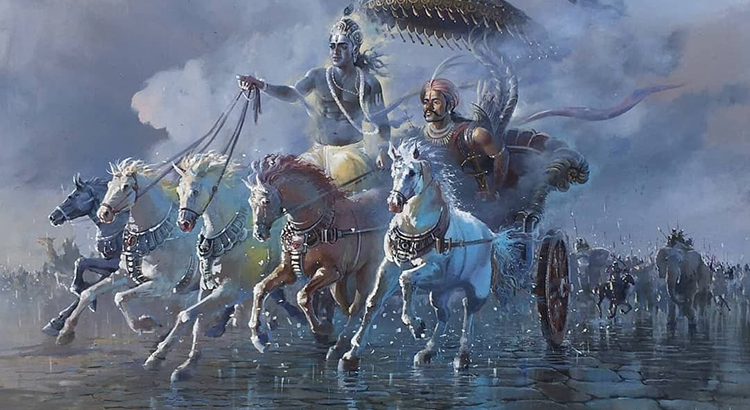
A night before the day of Matsya Vedh (Piercing fish eye) competition, Krishna and Arjuna conversation.

Krishna: Arjuna, take care, put your step forward and concentrate on the eye of fish.
Arjuna: If i have to do everything , then what will you do?
Krishna: What you can't do, I will do.
Arjuna: And what is it that I can't do?
Krishna answers: I will keep the water steady.

No matter how much work we do for our goals, we are not the creator here. We are the co-creator of our life. We must perform our karma and trust that everything beyond our control will be taken care by God or The Universe or the Higher Power or any other name you believe in.

Remember God is your silent invisible partner.

🙏 जय श्री कृष्ण जी 🙏
Read more
Leela Sasu Suniche Vahir Ridhpur

Leela Sasu Suniche Vahir Ridhpur

🙏 Dandvat Pranam 🙏

This leela is of the Goving Prabhu Ji Maharaj. Keshave Vihari Uddhiyapane Satra Aarogna, Sasu Suniche Vahir, Ridhpur. This is located on the Rddhapura the East side of the road tivasa, known as the Shee Govind Prabhu Charanankita , also well known as Sasu listen well.

Leela describes, at the East of the City how Keshav Nayakani dug a well and the well flodded with water after the touch of Shree Govind Prabhu step thumb.

Keshav Nayakani: dug a well, but it seems that there is no water inside the well. Then he said to Prabhu Ji there is no water inside, not even a single drop.

Shree Prabhu Ji: Told and forced Keshav Nayank to dig more inside.

Keshav Nayakani: Prabhu Ji, I tried my best. But really there is no more water inside. I am sure.

Shree Prabhu Ji: You will find, but still you must dig more inside.

Keshav Nayakani: Prabhu Ji, i am still trying, but still there is no water.

Shree Prabhu Ji: After the several tries of Keshav Nayanka, now the Govind Prabhu Ji touched the base with his foot step thumb. Then Keshav Nayank tried last time and planty of water start flowing outwards. Base starts gathering with water.

Finllay, Keshav Nayak have the well full of water and then he built a strong boundary wall around the well face. After this, Keshav Nayak give invitations to the Brahamns and the Munis for the lunch on the udhyapan. Shre Govind Prabhu Ji occupied the seat at the wall of the well. Prabhu Ji has taken the bhog there. In this way, Keshav Nayka did the udyapana. Then Kesavanayaka leaved to the Nagavale.


Original Leela in Marathi:
केशववीहीरी उद्यापनी सातरा आरोगणा :
सासु सुनेची विहिर ऋद्धपुर

ऋद्धपुर च्या पुर्वेला तिवसा रोडवर असलेली श्री गोविंद प्रभुं चरणांकित, ही विहिर सासु, सुनेची विहिर म्हणून प्रसिद्ध आहे.
लिळा :
नगराच्या पूर्वेस केशवनायकांनी विहिर खोदली. परंतु पाणी लागत नाही म्हणुन चिंतित झाले. मग श्रीप्रभु बाबांना विनंती केली, “ बाबा मी खुप कष्टाने विहिर खोदली परंतु पाणी लागत नाही.” सर्वज्ञ म्हणाले, “अवो मेला जाए, वीहीरी खणावी म्हणे : न खणावी म्हणे : मेला जाए खणावीची म्हणे :” तेंव्हा केशव नायक म्हणाले, “जी,जी एव्हडी खोल विहिर खोदली परंतु पाणी लागले नाही.” सर्वज्ञ म्हणाले, अवो मेला जाए खण म्हणे : आणि श्री चरणाचा अंगठा लावला. केशवनायकांनी थोडे खोदताच, खुप पाणी लागले. संपुर्ण विहिर पाण्याने भरली. सर्वजन आश्चर्यचकित झाले.

नंतर केशवनायकांनी सुंदर चिरेबंदी विहिर बांधली. आता फक्त वरील काठ बांधणे बाकी होते. तेंव्हा श्रीप्रभु म्हणाले, “मेला जाए, सीसवठी न बांधता, अगोदर उद्यापन कर म्हणे :” केशव नायक म्हणाले, ज्याअर्थी गोसावी म्हणतात तेंव्हा पुढे काही तरी कठीन प्रसंग असेल ! म्हणून उद्यापण करवित असतील. मग केशव नायकांनी उद्यापऩाची तयारी केली. माडव घातला, ब्राम्हण बोलावले, हवण केले, ब्राम्हणाला जेउ घातले. नंतर गोसावी तेथे बीजे केले, विहीरीमधे एका ठिकाणी बसुन आरोगणा झाली.

इकडे त्याच दिवसी कटक देवगीरीला विठ्ठलनायक व दाएनायकांना, जे राज दरबारा मधे दरबारी होते तृटी आली म्हणून पकडले. केशवनायक त्यांचे व्याही होते, व त्यांनी काही वस्तू केशवनायकां कडे ठेवली होती. म्हणून केशवनायक ही नागवले गेले. तेंव्हा केशवनायक म्हणाले, “राउळांनी येणा-या संकटाची सुचना म्हणून उद्यापण करविले..! [ऋ.च. १५५]

|| दंडवत प्रणाम ||

🙏 जय श्री कृष्ण जी 🙏
Read more
Twenty Four Gurus of Lord Shree Dattatreya - Avadhoot Prabhu

Twenty Four Gurus of Lord Shree D...

🙏 Dandvat Pranam 🙏

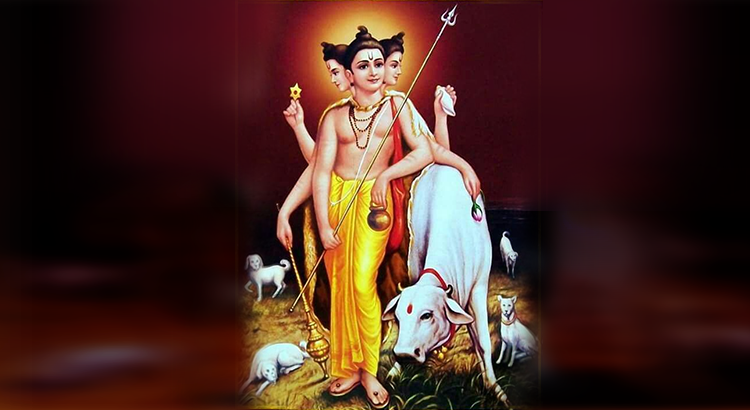
Lord Shree Dattatreya said
I have taken shelter of twenty-four gurus, who are the following: the earth, air, sky, water, fire, moon, sun, pigeon and python; the sea, moth, honeybee, elephant and honey thief; the deer, the fish, the dancing girl Pingala, the kurari bird and the child; the young girl, arrow maker, serpent, spider and wasp…
Srimad Bhagavatam: Canto 11: Chapter 7: Slokas 33~35
1. Prithvi (Earth) One should acquire the virtues of endurance and tolerance of duality from the earth. The Earth teaches course of Dharma, art of Tolerance, art of Performing Duty.
2. Vaayu (Air) One should be detached like the wind. The Wind being pure and odourless in its characteristics, move freely among all objects and yet remain unaffected. Calm and ever flowing without any fear.
3. Aakash (Sky) Just like the sky one should be single and steady. Like sky, the Soul is omnipresent, all-pervading, and infinite in nature.
4. Jall (Water) Just like water one should behave with affection towards all. Never be partial to anyone. The sage is like water because he is free from all impurities, gentle in nature and while speaking he creates a beautiful vibration like the flowing of water.
5. Agni (Fire) Like the fire one should behave with equality towards all. The sage's glory is like the fire, is made brighter by austerities, his knowledge and tapas; having no vessel other than his stomach.
6. Chandar (Moon) There are in all sixteen phases of the moon including the subtle phase of the new moon and the fifteen of the fortnight. Though there is waxing and waning of the moon, it remains unaffected by them. Sage should not be affected by the continual change of body from birth to death including diseases and old age.
7. Surya (Sun) The sun stores water taking the future into account and benevolently showers it on the earth at the appropriate moment. Similarly the sage can accept material things with his senses, but at the appropriate time he should give these things back, as an act from sense of duty. Without getting attached to material sense objects.
8. Kabootar (Pigeon) Like pigeon story warns against developing obsessive love or attachments in the transient material world. The sage would refrain from attachment after attaining the human body, which is the open door to Mukti (Moksha, Liberation), a door to God-Realization.
9. Ajgar (Python) Ajgar eats whatever comes in its way and satisfy, whether it is sufficient or not, bitter or sweet etc. A sage always goes for search of wisdom and refrains from running after unwanted pleasures.
10. Samudra (Ocean) One should not let anyone perceive one's virtues just as the sea keeps its length, breadth, depth and the treasures in its bed hidden from everyone. However one should always utilise them favourably, for the sake of others. The life of sage remains balanced; the joys of life do not excite him, nor do sorrows depress him. The wise sage never transgresses the highest standards of morality.
11. Patanga (Moth) Similarly a foolish man is enticed by the illusory pleasures of the visual senses and thus gets caught in the ceaseless cycles of birth and death. Man must try to control the sense of sight (and all other senses) and to try to avoid being greedy.
12. Madhu Mskhee (Honey Collector) Just as the one who collects the honey acquires it effortlessly so also a male seeker should partake of food cooked in the home of a householder instead of spending time in making a fire, collecting utensils, firewood, etc. Thus learning that accumulation of wealth leads to sudden death like the honey bee, one should stop amassing wealth.
13. Haathi (Elephant) Men allured by adulterous women are destroyed in the same way as elephants overcome with lust die fighting amongst themselves.
14. Mdhumakkhee (Bumble Bee) Just as the bumble-bee savours the fragrance of several sunflowers instead of one so also seekers desirous of Liberation should realise that every science will not be easy to grasp and hence should try to understand their implied meaning.
15. Hiran (Musk Deer) The deer is very fond of music and is very much attracted by it. The deer is trapped by hunter through its love for music. Hunter employs music to lure the deer before hunting it. A renounced person should never become attracted by mundane sounds like sensuous music, specially the sweet singing and dancing of girl.
16. Machli (Fish) When a fish-hook fastened with bait is thrown into the water, the fish lured by the bait swallows the hook and gets caught. Thus it loses its life. So one should never lose sight of his True Self.
17. Pingala (A Dancing Girl) One night despite a long wait not a single client approached her. As she restlessly waited pacing up and down, hoping for a client she was finally bored and suddenly developed detachment. The abandonment of expectation from people, leads to contentment and infinite joy.
18. Pakshee (Lapwing) Seeing the lapwing fly with a fish in its beak hundreds of crows and eagles began chasing it, pecking at it and tried to snatch the fish, thus harassing it. This flock began following it wherever it went. In this world there is peace only if sense objects are rejected, otherwise it leads to great distress.
19. Balak (Child) Live like being child at heart, innocent, care free and full of Supreme Joy.
20. Churiyaan (Bangles) When two bangles strike each other a jingling sound is generated. The more the bangles the greater is the sound. Similarly when two persons live together it leads to conversation and when many persons live together there is strife. In both circumstances there is no peace of mind. Hence those doing meditation, yoga, etc. should search for an isolated place and live there in seclusion.
21. Shilpkar (Artisan) One day an artisan was chiselling the blade of an arrow with great concentration. A king's procession to the accompaniment of music passed by that way. A man arriving later approached the artisan and enquired, “Have you seen the king's procession passing by this way, just now?” The artisan replied, “I was so engrossesd in my work that I was not aware of anything”. Just like this artisan a seeker desirous of Liberation (mumukshu) should meditate surrendering all his sense organs to The Lord.
22. Saanp (Snake) The snake lives alone and avoids the company of other creatures. In order to seek Self-Realization, one should abide in the cave of his own heart. The snake leaves of its old skin after sometime, and gets the newer one; that make resemblance with phenomenon of death. A true sage never frightened by the death, knowing sooner or later he will get a new life based on his karmic actions.
23. Makadi (Spider) The spider spins a web secreting a fluid from its belly and plays in it day and night. When it feels like it, it swallows the entire web and becomes free again. Lord Supreme creates material universe from His Maya, preserves it and after a while draws it back into the Self. The Supreme Self has no desires and is beyond the reach of cause and effect.
24. Bhringee Keet (Caterpillar, Wasp) The wasp catches hold of a worm (caterpillar), put it in its hive (nest), gives it a sting and goes on buzzing about it. The caterpillar is so frightened by this whole ongoing process of buzzing. As a man thinks, so he becomes. Even at the time of death, whatever one's mind focused on, one attains the same living species form in his next life.
Thus one must try to give up all attachment to the body and attain Moksha or liberation.
Shree Dattatreya explains what he has learned from his own body as a Guru My Body teaches me Gyaan (knowledge) and Vairaagya (detachment). Birth and death are along with it. It means that if we hold on to this body then we have to bear sorrows. Although it helps to think about Tattwa (elements) still I never consider it mine.

🙏 जय श्री कृष्ण जी 🙏
Read more
Sthans and presence of Parmeshwar avatar of Mahanubhav Pantha

Sthans and presence of Parmeshwar...

🙏 Dandvat Pranam 🙏

Ubhaydarshi avatar having relation with any of the inertness and the place are sacred. These sacred place and objects have the two special forces 1. Maya Samarthya Shakti and 2. Kripa Shakti. In the Sathan the Maya Samarthya (माया सामर्थ्य) is President and the Anushangik (आनुषांगिक) is Subsidiary. But where the blessing of the god is present, where the Parmeshwar avatar (Ubhaydarshi avatar) have taken the stand for the sufficient days are having the Anushangik (आनुषांगिक) as President and Maya Samarthya (माया सामर्थ्य) as Subsidiary.

Classifications of Sthan
Since the Parmeshwara avatar is having the numbers of competency, but the major one is Kripa Shakti and Kripa Shakti develops at own. The places and the Sathans are divided according to the categories of time. The time spent by the Parmeshawar avatar on the places make them the sacred places and the Sathan. In our Mahanubhav Pantha the Sathan is the one of the most sacred thing.

Aasan Sthan – आसनस्थान
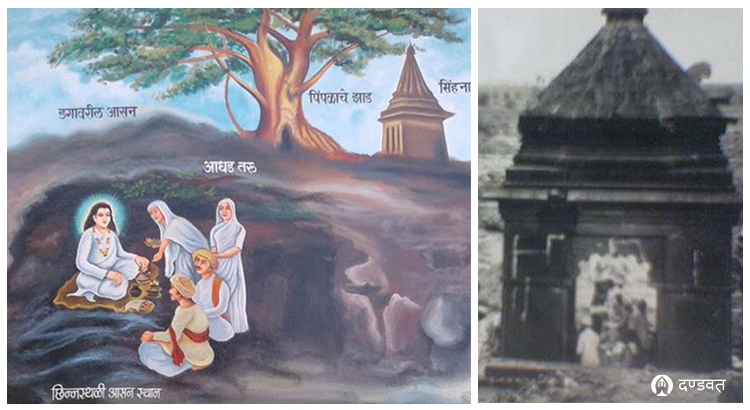
The sthan where the Parmeshwar avatar have taken rest for few hours. Hours may vary from 5 to 7 hours. This is the first type of Sthan. Sthan is blessed with the powers of the Parmeshwar Shakti. Making pilgrimage of the Sthan’s is the culture of Mahanubhav Pantha.

Charan Chari – चरणचारि
Places where the Parmeshwar avatar have been standing without the slippers and the wooden Paduka (पादुका). There might be reasons behind this, but the footprints and the places is very sacred for the Mahanubhav Panth.

Vasti Sthan – वसति स्थान
Prameshwar avatar are always on the way to help people to attain Moksha and set them free from their sins and previous Karmas. In between the time, they have taken rest for one night. This makes the Sathan as Vasti Sthan. Our Panch avatar’s are always flowing from one to another place.

Kudi Vasti – कुड़ी वसति
Kudi Vasti is similar to the Vasti Sthan, the difference is that in the Vasti Sthan the time period is only one night, but the Kudi Vasti is having the one day two nights or two day two nights. This is how the Vasti Sthan and Kudi Vasti are different.

Sthan – स्थान
Sthan, now here we come with the same thing but the different time period. Here the Parmeshwar avatar have slept for there to five days. The place is more sacred as compare to the Kudi Vasti. Sthan is the most common word used, but the Sthans are divided too.

Avasthan – अवस्थान
Avasthan, here we have the time period of five to nine days. Here the Parmeshwar avatar blessed the sacred place with more presence.

Mahasthan – महास्थान
Mahasthan, finally this is the last and the most blessed sacred place. The time period is more than the nine days, this might be 1 month, 2 months, 6 months and even in the years. The Mahasthan is where the Parmeshwar avatar have been living and making the people aware about the Bliss (Moksha) and ways to attain Moksha.

॥ जय सर्वज्ञ श्री चक्रधर ॥

बिना भाग्य जो वस्तु ईश्वर अवतार देते है वह लिला ज्ञान कहलाता है।
अवतार के सम्बन्ध से जो फल प्राप्त होता है वह सम्बन्ध दान कहलाता है।
जीवो के कर्मों को ग्रहण कर उन्हे सीघ्रता से भुगवाने को ग्रहणा दान कहते है।
और ईश्वर स्वरूप की प्राप्ती होना यह कैवल्य दान कहते है।
ईस प्रकार ईश्वर की ओर से ये चार प्रकार के दान दिये जाते है।
॥ दंडवत प्रणाम ॥

🙏 जय श्री कृष्ण जी 🙏
Read more
Shri Govind Prabhu throw segule budde towards Haripaldev and said you are my Chakradhar, you are Chakrahya, my Chakra

Shri Govind Prabhu throw segule b...

🙏 Dandvat Pranam 🙏

Jai Shri Chakradhar Swami; Shri Prabhu Darshan:

As guards got up from their sleep they started searching Prince Haripaldev, but they couldn't find him. By getting the news of Haripaldev has been lost, Vishaldev, father of Haripaldev started searching him all over but they fail to find him. Haripaldev took every step in an undisclosed direction.

It was twenty fifth day since Haripaldev had left Bharauch. Haripaldev came to the principal town of Rudhapur (Ridhpur) which was dwelling place of another Ishwari Avtaar, Shri Govind Prabhu Maharaj.

As it was before mentioned, that Shri Prabhu was fourth Ishwari Avtaar in Mahanubhav Panth (Jai Krishni Pantha or Achyuta Pantha).

Shri Prabhu had taken incarnation by replacing a yet to be born child from the womb of mother Nemaisa; and that child had some physical and mental infirmities and abnormalities. Shri Prabhu adopted all this features. Due to this, it was complex to understand Shri Prabhu, but who comprehend his true form, became his lifelong Bhaktas. Shri Prabhu performed many Miracle by giving life to the dead, good fortune to deprived ones and shelter to the destitute. Shri Prabhu also send lowly creatures such as insects to the highest level of attainment.

Once Shri Prabhu left Rudhapur, that year no rain takes place in Rudhapur. While moving around in the streets of Rudhapur, Haripaldev came to market place known as Randhwan Haat (the market of Sweet). At that place, Haripaldev got attracted by the divine presence of Shri Prabhu. Haripaldev saw Shri Prabhu smiling, grey beard and hair, half-clad and face having wheaten complexion with fair radiance. His eyes were half open and eyeball gazing towards the sky. Left small finger having slight blend. Haripaldev paid respects to Shri Prabhu by bowing before him with folded hand known as Namaskar (Dandvat Pranam). He chanted glory for him. Then he stood aside and watched Shri Prabhu acts of benevolence. A large gathering of devotees had surrounded Shri Prabhu who was enjoying some local food preparation known as Segule Budde.

Suddenly Haripaldev heard Shri Prabhu saying, “Take it, don’t take, yes take it, oh, take it” and Shri Prabhu throw Segule Budde towards Haripaldev. By this, Haripaldev grabbed Segule Budde by both his hands and he bowed again towards Shri Prabhu. Both the Avtaar (Prince Haripaldev in form of Dwaravati Shri Changdev Raul / Shri Chakrapani Maharaj and other side Shri Govind Prabhu / Shri Prabhu / Shri Gundam Raul himself) looked intensely at each other. Meeting of eyes produced a Miracle. Shri Prabhu came towards Haripaldev and kept his hand on Haripaldev forehead and said, “You are my Chakradhar”, you are Chakrahya, my Chakra.

🙏 जय श्री कृष्ण जी 🙏
Read more
Shri Chakarapani Prabhu's – Shri Abasaheb Temple Phaltan

Shri Chakarapani Prabhu's – Shri ...

🙏 Dandvat Pranam 🙏

Mahasthan Shri Abasaheb Temple. This temple is popularly known as “Shri Abasaheb Temple” at Phaltan, Maharashtra. In earlier times, this was the home of “Rambhaisa” [रंभाइसा]. “Rambhaisa” who was the stepmother of Shri Chakrapani Prabhu Maharaj and she was the sister of Chakrapani Prabhu’s real mother “Janakaisa” [जनकाइसा]. Rambhaisa brought Shri Chakrapani Prabhu at her home when Prabhuji was just one year old.
Shri Chakrapani Prabhuji stayed at this place for around 10 years.

Renovation of this temple was made using red/pink stones and this is one of the beautiful temple of Mahanubhav Pantha temples. This is Charanankit Sthan [चरणांकित स्थान] of Shri Chakarapani Maharaj.

Shree Chakrapani Maharaj was a great saint in the Bhakti tradition in Hinduism and his teachings inspired in the formation of Mahanubhav sect.

🙏 जय श्री कृष्ण जी 🙏
Read more