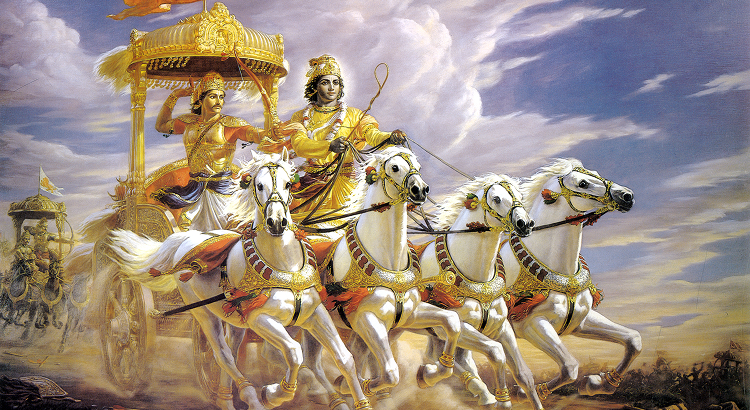
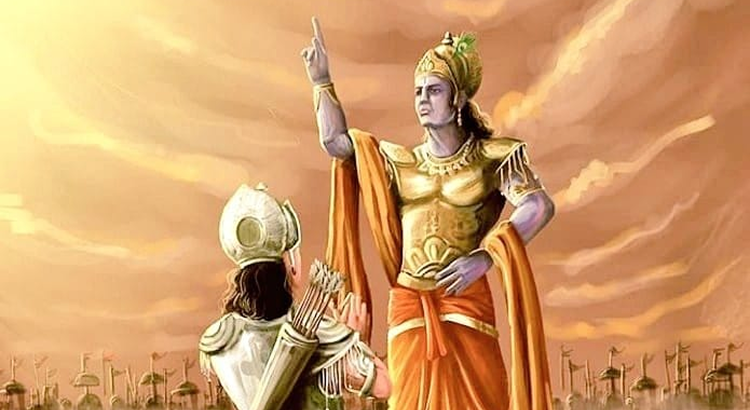





Surrender everything to me, I am the God: O Arjuna: Bhagavad Gita, Chapter XVIII, Verses 66

Surrender everything to me, I am the God: O Arjuna: Bhagavad Gita, Chapter XVIII, Verses 66
  • Author: Dandvat
  • Posted on: 2017-12-31 08:00:00
  • Tags: Shree Krishna Prabhu, Knowing Mahanubhav Pantha, Bhagavad Gita, Krishan Leela, Mahabharat, Teaching Arjuna
  • Post ID: 1514687400

🙏 दंडवत प्रणाम
नमो पंच कृष्ण अवतार


📰 Blogs

नमो पंच कृष्ण अवतार - Read the blogs of Mahanubhava Pantha. Go to Blogs

Gyan Shakti Savikar - When Shree Chakarapani Maharaj ji accepted the Gyan Sakti form Shree Dattatreya Prabhu ji

Gyan Shakti Savikar - When Shree ...

🙏 Dandvat Pranam 🙏

It was the time when Shree Chakarapani Maharaj Ji left to Mahur, it was the Saka 1080 era. At the age of 30; Shree Chakarapani Ji made the pilgrimage to meet Shree Dattatreya Prabhu Ji since the reason behind is to receive the Avatar Shakti from Avadhot Prabhuraya.

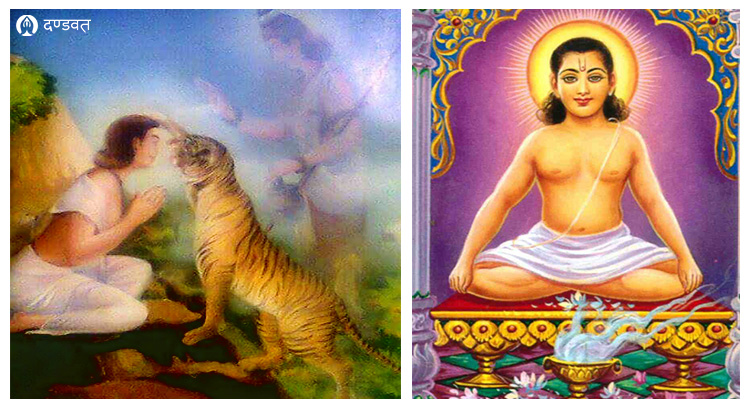
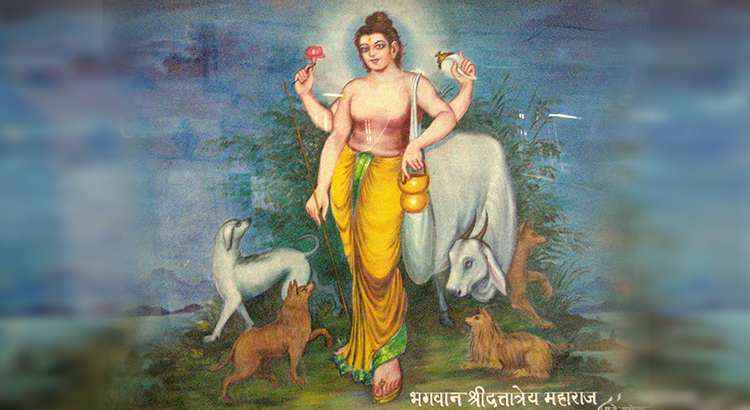
People were climbing step by step to the Mahurgarh peak. They all were in a row. Suddenly, the people started making panic, there was a tiger behind them. But Shree Chakarapani Prabhuji fearlessly set himself in front of the tiger, because he knows Shree Dattatreya Prabhuji is in the form of the tiger.

Then Prabhu ji greeted tiger with a namaskar. Then after, The Lord Shree Dattatreya Maharaj Ji blessed him with his toe and given him the Ubhay Shakti (उभय शक्ती) and Shree Chakarapani Ji accepted the Gyan Shakti (ज्ञान शक्ती) and started the work with the Para Shakti (पराशक्ती).

ज्ञान शक्ती स्वीकार
इधर श्री चक्रपाणी माहुर को आ गये, शके 1080 (इ.स.1158) उमर के 30 वे वर्ष माहुर मेँ श्री दत्तात्रेय प्रभु से मिलने के लिये, क्योकी भगवान को अवतार शक्ती स्वीकार कार्य करना था। लोग माहुर के गड (शिखर) पर चढणे लगे, श्री चक्रपाणी भी यात्रीओँ के पीछे अंतर रखकर चढ रहे थे, तभी अचानक एक जाली मेँ से (श्री दत्तात्रेय प्रभु) वाघ के रुप मेँ आरोगना करके आ गये, यात्रीगण इधर उधर भागने लगे पर श्री चक्रपाणी महाराज वही एक खडक पर बैँठ गये, और श्री चक्रपाणी प्रभु श्री दत्तात्रेय प्रभु के (वाघ) सामने बैठ कर नमस्कार कीया, तभी वाघने (श्री दत्तात्रेय प्रभु) श्री चक्रपाणी के सर पर पंजा रखकर उभय शक्ती प्रदान की, श्री चक्रपाणी राऊळ ने ज्ञान शक्ती का स्वीकार किया उसमेँ “पराशक्ती” के आच्छादन करके अवर शक्ती के कार्य सुरु कीये|

🙏 जय श्री कृष्ण जी 🙏
Read more
Place and time of birth of our five incarnations of Mahanubhav Pantha

Place and time of birth of our fi...

🙏 Dandvat Pranam 🙏

Place and time of birth of our five incarnations of Mahanubhav Pantha or Jai Krishni Pantha or Achyuta Pantha.
Sarvadnya Shree Chakradhar Swami told to his pantha that the lord takes avatars in all four Yugas (Krutayuga, Tretayuga, Dwaparyuga, Kaliyuga). Same was said by Shree Krishna in Shree Bhagavad Gita: “Dharma Sansthaapnaarthay Sambhavaami Yuge Yuge”. Accordingly, there is not a time in this world when an avatar is absent.
Mahanubhav Pantha teaches that Krishna is the only God in Universe.

The Five incarnations of God knows as Pancha Krishna or Five Krishnas or Namo Panch Krishna Avatar:

1. Lord Shree Krishna Maharaj
- Place of birth: Mathura detention (Prison) Uttar Pradesh
- Time of birth: Shravan Krishna paksha eighth night at 12 pm (Wednesday)

2. Lord Shree Dattatreya Maharaj
- Place of birth: Bdrikashram Uttrakhand (Himalayas)
- Time of birth: Margshis Shukla Chaturdashi at 4 AM (Friday)

3. Lord Shree Chakrapani Maharaj
- Place of birth: Phalatan district Satara (Maharashtra)
- Time of birth: Asivan ninth waning at 5 am (Thursday)

4. Lord Shree Govind Prabhu
- Place of birth: Katsur Ridhpur (Maharashtra)
- Time of birth: 10 pm Tryodshi Bhadrapad Shukla (Tuesday)

5. Sarvadnya Shree Chakradhar Swami
- Place of birth : Bharuch, (Gujarat)
- Birth Time : 2 pm second Bhadrapad Shukla (Friday)

🙏 जय श्री कृष्ण जी 🙏
Read more
Shree Mad Bhagavad Gita one of the holy books of Hinduism and Mahanubhava

Shree Mad Bhagavad Gita one of th...

🙏 Dandvat Pranam 🙏

Shree Mad Bhagavad Gita one of the holy books of Hinduism. Shree Mad Bhagavad Gita is written thousands of years ago consists of 18 chapters. It is the samvad of Lord Shree Krishna and the Dhanusdhardi Arjuna. Shree Mad Bhagavad Gita is freely offering this presentation of Sri Mad Bhagavad Gita to the Earth as a gift to humanity. The date of the Kurukshetra war and the delivery of Bhagavad Gita to Arjuna by Sri Krishna are supposed to be around 3139 BCE.
There are three paths which lead directly to establishing a relationship with God. According to the authority of Shree Mad Bhagavad Gita these paths have been designated as
1. The yoga of perfect actions.
2. The yoga of perfect devotion.
3. The yoga of perfect knowledge.

Shree Mad Bhagavad Gita text is organized in twelve Skandhas (books) subdivided into 332 Adhyayas (chapters), and has between 16,000 to 18,000 verses, depending on the manuscript version. Of the 12 books, it is the 10th book with about 4,000 verses that has been the most popular, studied and recognized. The text asserts that it is Krishna in literary form.
Each chapter is called a yoga. Yoga is the science of the individual consciousness attaining communion with the Ultimate Consciousness. So each chapter is a highly specialized yoga revealing the path of attaining realization of the Ultimate Truth. The first six chapters have been classified as the Karma Yoga section as they mainly deal with the science of the individual consciousness attaining communion with the Ultimate Consciousness through actions.

These chapters are:
Attharah adhaya of Shree Mad Bhagavad Gita

1. Arjuna–Visada Yoga Prathama adhaya
Arjuna has requested Krishna to take his rath between the two armies, where he can see to who were in his opposition and who were with him . His growing dejection is described as he fears losing his friends and relatives as a consequence of Yudh.

2. Sankhya Yoga Dwitiya adhaya
After asking Shree Krishna for help, Shree Krishna teched him the Karma yoga, Gyaana yoga, Sankhya yoga, Buddhi yoga and the immortal nature of the soul Atma amar hai, ise koi nhi maar skta.. Sankhya Yog nam Dwitiya adhaya here refers to one of six orthodox schools of the Hindu Philosophy. This chapter is often considered the gyaan of the entire Shree Mad Bhagavad Gita.

3. Karma Yoga Tritiya adhaya
Shree Krishna explains how the Karma yoga – Performance of prescribed duties, but without attachment to results, is the appropriate course of action for Arjuna. Shree Krishna teached him how Karma will take him to the purification of soul.

4. Gyaana–Karma-Sanyasa Yoga Chaturth adhaya
Shree Krishna exposed that, he has lived through many births through prarambh of Universe. Always teaching yoga for the protection of the pious and the destruction of the impious and stresses the importance of accepting a guru. Shree Krishna teach him to remove the shanshya from his mind and approach to Karma.

5. Karma–Sanyasa Yoga Pancham adhaya
Arjuna asks Lord Shree Krishna if it is better to forgo action or to act. The Lord Shree Krishna answers that both are ways to the same goal but that acting in Karma yoga is superior. Arthat Prabhu shared Gyaan and Karam yoga both take him to Mokash, but Karam yoga is superior to Gyan yoga.

6. Atmasanyam Yoga Shasht adhaya
Krishna describes the Ashtanga yoga. Then, further throw light on the difficulties of the mind. How to gain the stable state of mind where nobody can influence you and the techniques by which mastery of the mind might be gained. Then your warrior will help you to understand the difference between Moah and Prem.

7. Gyaana Vigyaana Yoga Saptam adhaya
Vasudev Shree Krishna describes the absolute reality and its illusory energy Maya. Prabhu said this world is all his Maya, the illusion. People are tied to this world and Maya, they can’t see beyond this illusion. Those who can, for them there is no thing hidden.

8. Aksara Brahma Yoga Ashtam adhaya
This chapter contains eschatology of the Shree Mad Bhagavad Gita. Prabhu said, life is all about the 84 lacs births that a person take to reach this human body and the difference between death and life.

9. Raja Vidya Raja Guhya Yoga Navam adhaya
Lord Krishna explains Raja Vidya or Raja Guhya refers only to the Suddha bhakti yoga. Shree Bhagavan accepts that which is offered by the suddha bhaktas with love. In the last sloka in this chapter (man mana bhava mad-bhaktah), it is concluded that bhakti is the only means to attain Shri Bhagavan.

10. Vibhuti Vistara Yoga Dasham adhaya
Shree Krishna is described as the ultimate cause of all thee Jeev and Atma, Prabhu said without Paramatma, Atma and Jeev wouldn’t be single. Arjuna accepts Shree Krishna as the Supreme power.

11. Visvarupa Darsana Yoga Gyarawah adhaya
Arjuna requested Lord Shree Krishna to show him his Visvarupa, the Universal Avatar. Later Arjuna says, Prabhu your this avatar is of a being facing every way and emitting the radiance of a thousand suns, containing all other beings and material in existence. You are the Universe, there is nothing beyond you. You are the only GOD to worship.

12. Bhakti Yoga Barwah adhaya
Lord Shree Krishna reveals the path of devotion and worshio to God. Krishna describes the process of devotional service Bhakti yoga. He also explains different forms of spiritual disciplines and yoga process to attain the peace and learn the way to God.

13. Ksetra Ksetrajna Vibhaga Yoga Terwan adhaya
The difference between transient perishable physical body and the immutable eternal soul is described. Prabhu descirbed the difference between actual and the perceptual. Then LordShree Krishna tells about the nature of problem and its solution.

14. Gunatraya Vibhaga Yoga Choudwan adhaya
Prabhu SHree Krishna explains the three modes (Gunas) of material nature pertaining to goodness, passion, and nescience. The sankalpa of Prabhu is thus the instrumental cause of creation, and his Illusion Maya becomes the material cause. This Maya has three Gunas – the Sattva, Rajas & Tamo Gunas.

15. Purusottama Yoga Pandrwan adhaya
Lord Shree Krishna identifies the transcendental characteristics of God such as, Omnipotence, Omniscience, and Omnipresence. Lord Shree Krishna also describes a symbolic tree representing material existence. “Creation, with its Eternal as well as ephemeral aspects, can be likened to the Ashwattha tree which has its roots above and branches below. the Vedas are its leaves. He who fully comprehends the nature of this tree truly understands.”

16. Daivasura Sampad Vibhaga Yoga Solwan adhaya
Vasudev Shree Krishna identifies the human traits of the Divine (Sure) and the Evil (Asure) natures. He counsels that to attain the supreme destination one must give up lust, anger, greed, and discern between right and wrong action by discernment through Buddhi and evidence from the scriptures.

17. Sraddhatraya Vibhaga Yoga Satarwan adhaya
Lord Shree Krishna qualifies the three types of Faith, Thoughts, Deeds and even Eating habits corresponding to the three modes (gunas). These 3 type of Gunas are – the Sattva, Rajas & Tamo Gunas.

18. Moksha Sanyasa Yoga Attharwan adhaya
Here finally God the Vasudev Shree Krishna gives the conclusions of previous seventeen chapters. Then again, Prabhu asks Arjuna to abandon all forms of Dharma, fix your mind on me, be devoted to me, perform sacrifice and simply follow his gyan and be the part of Dharam Yudh. I promise, (since) you are dear to me.

🙏 जय श्री कृष्ण जी 🙏
Read more
What is Karma: Action or Deed

What is Karma: Action or Deed

🙏 Dandvat Pranam 🙏

Karma is a Sanskrit term. It means action or deed. Any physical or mental action is Karma. Thinking is mental Karma. Karma is the sum total of our acts, both in the present life and in the preceding births.

Karma means not only action, but also the result of an action. There is a hidden power in Karma or action termed 'Adrishta' which brings in fruits of Karmas for the individual. The consequence of an action is really not a separate thing. It is a part of the action and cannot be divided from it.

According to the Gita, any action done with Nishkamya Bhava (selflessness) is Karma.
Lord Krishna says: Work incessantly. Your duty is to work but not to expect the fruits thereof. The central teaching of the Gita is non-attachment to work. Breathing, eating, seeing, hearing, thinking, etc., are all Karmas. Thinking is real Karma. Raga-dvesha (likes and dislikes) constitute real karma.

🙏 जय श्री कृष्ण जी 🙏
Read more
5000 years ago in the battlefield of Kurukshetra

5000 years ago in the battlefield...

🙏 Dandvat Pranam 🙏

The Divine song I love the most of Supreme Lord Krishna which everyone must remember. Bhagvad means God & Gita means Song. So it is song of divine himself. 5000 years ago in the battlefield of Kurukshetra Prabhu Shree Krishna himself sang the greatest philophical song for all humankind. And its not the first time he sang it billions of years ago he sang it to sun god vivasana.

ईश्वरीय गीत मुझे सबसे ज्यादा प्रिय है सर्वोच्च भगवान कृष्ण जो कि हर किसी को याद होने चाहिए। भगवद् का अर्थ है भगवान और गीता का अर्थ है गीत। इसलिए यह स्वयं परमात्मा का गीत है। 5000 साल पहले कुरुक्षेत्र के युद्ध के मैदान में स्वयं प्रभु श्री कृष्ण ने सभी मानव जाति के लिए सबसे बड़ा फिलोफिकल गीत गाया था। और यह पहली बार नहीं है जब उन्होंने इसे अरबों साल पहले गाया था, उन्होंने इसे सूर्य देवता के लिए गाया था।

The reason Krishna comes to the material world is specifically to re-establish the real purpose of life when mankind in general has forgotten this purpose. Krishna is very merciful to us, it is out of His mercy that He spoke the Bhagavad-gita, making His friend Arjuna the first student.

कृष्ण भौतिक दुनिया में आने का कारण विशेष रूप से जीवन के वास्तविक उद्देश्य को फिर से स्थापित करना है जब सामान्य रूप से मानव जाति इस उद्देश्य को भूल गई है। कृष्ण हमारे लिए बहुत दयालु हैं, यह उनकी दया से बाहर है कि उन्होंने भगवद् गीता बोली, अपने दोस्त अर्जुन को पहला छात्र बनाया।

🙏 जय श्री कृष्ण जी 🙏
Read more
Sarvadnya Shri Chakradhar Swami - The Divine Light

Sarvadnya Shri Chakradhar Swami -...

🙏 Dandvat Pranam 🙏

Sarvadnya Shri Chakradhar Swami, born in Gujarat, Karmabhumi in Maharashtra, the divine light of Sri Chakradhar Swami sustained Sanatan Dharma at a difficult time in Indian history by spiritual galvanization & healing of the Indic society at large. Temples in his honour existed even in Afghanistan at one time.

There are three paths which lead directly to establishing a relationship with God. According to the authority of Shree Mad Bhagavad Gita these paths have been designated as
Sarvadnya Shri Chakradhar Swami told his disciples that the lord takes avatars in all four yugas. Same was said by Shree Krishna Prabhu in Shree Mad Bhagavad Gita: “Dharma Sansthaapnaarthay Sambhavaami Yuge Yuge”

Accordingly, there is not a time in this world when an avatar is absent. But he told of only five of the innumerable avatars, namely: Shri Krishna, Shri Dattatreya Prabhu, Shri Chakrapani Prabhu, Shri Govindaprabhu, and Sarvadnya Shri Chakrdhar Swami (himself). Even knowing of one avatar, and walking on the path lightened by him, can lead to the ultimate bliss (moksha). There were only five, because these avatars fell in the Guru Parampara. Govindaprabhu was the guru of Shri Chakradhar Swami. Shri Chakrapani Prabhu was the guru of Shri Govindaprabhu. Shri Dattatreya Prabhu was the guru of Shri Chakrapani Prabhu. Shri Dattatreya Prabhu and Shri Krishna are not said to have another avatar as Guru.”

About Shree Chakradhar Swami
Haripaldeva was born at Bharavas (Bharuch,present day Gujarat) as the son of a king named Vishaldeva & his queen Mhalani devi. Haripaldeva died due to fever at the age of twenty at which point, a widely believed reincarnation of lord krishna named Shri Chakrapani Prabhu from Phaltan entered the dead body of Haripaldeva after which he revived. The thus reborn Haripaldeva was a greatly changed personality who would become known as Shree Chakradhar Swami.

Contribution of the Mahanubhav Panth to Marathi Literature
Sri Chakradhar Swami’s biography “Leela Charitra” written by his disciple Mahimbhatta is one of the first known works in Marathi literature; Also, Mahdaaisa, one of pant’s earlier devotees is considered to be the first Marathi poetess. One of the most important aspects of the philosophy propounded by him is asceticism. His fourfold teachings are: Non Violence, Celibacy, Asceticism and Bhakti.

Literature
Leela Charitra: Leela Charitra is thought to be the first biography written in the Marathi language. Mahimbhat’s second important literacy creation was Shri Govindaprabhucharitra or Rudhipurcharitra, a biography of Swami’s guru, Shri Govind Prabhu, in the form of 325 deeds. This was probably written in 1288, soon after the death of Shri Prabhu.
Satigranth: It was Nagadeva who systematized Mahanubhava. Mahadamba was a leading poetess of the movement. Besides Leelacharitra, Keshobas alias Keshavrajsuri has collected the Swami aphoristic vachans or actually spoken words, known as Sutrapath which is always on the lips of the follower of Mahanubhav.
Keshavrajsuri translated the some of “deeds” from Leelacharitra into Sanskrit in his work called “Ratnamala”. Similarly he has written in Sanskrit Dristantstotarm based on Dristantpath. The first Acharya of Mahanubhava Sect is Nagdevachrya or Bhatobas. His biography was written by Narendra and Bhaidevbas in about 1308.

There are seven works which have been written are known as satigranth and they are accepted by the followers of the sect. These are:
  1. Narendra : Rukaminiswayamvara (1292)
  2. Bhaskarbhat Borikar : Shishupalvadha (1312)
  3. Bhaskarbhat Borikar : Uddhavgita (1313)
  4. Damodar Pandit : Vachhaharana (1316)
  5. Ravalobas : Sahayadrivaranana (1353)
  6. Narayanbas Bahahaliye : Riddhipurvarnana (1418)
  7. Vishvanath Balapurkar : Janaprabodh (1418)

🙏 जय श्री कृष्ण जी 🙏
Read more