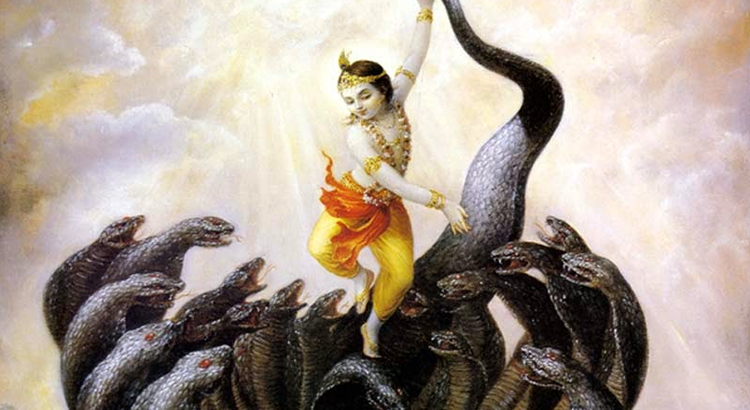





Kaliya The poisonous Naga living in the Yamuna River

Kaliya The poisonous Naga living in the Yamuna River
  • Author: Dandvat
  • Posted on: 2016-01-31 08:00:00
  • Tags: Shree Krishna Prabhu, Knowing Mahanubhav Pantha, Mahanubahv Panch Avatar,
  • Post ID: 1454207400

🙏 दंडवत प्रणाम
नमो पंच कृष्ण अवतार


📰 Blogs

नमो पंच कृष्ण अवतार - Read the blogs of Mahanubhava Pantha. Go to Blogs

Shree Chakardhara Swami ji said By doing the Seva-Dasya-Bhajan-Pujan of these four means Sthan-Prasad-Bhikshuk-Vasnik you can outreach me

Shree Chakardhara Swami ji said B...

🙏 Dandvat Pranam 🙏

It is very necessary to remember and recall the name of Prabhu ji according to the rituals as explained in the Bhramvidya Shashtra. Take the silent place and do the smaran there. While remembering the Prabhu ji, you must be directly associated to the god. Try to remember the way in which you can actually feel the things happening during that time. Flashback the things as they are going now.

It is proven that Smaran is the only way to get closer to the ultimate spirit called Lord. While doing the smaran, remember that your posture must be straight and your eyes must be half closed and pointing towards straight. Buzz in the little louder sound, such that your body can feel the positive vibes of that word. The best time to do the smaran is in-between 03:00AM to 06:00AM.

Shree Chakardhara Swami ji usually says “Wake early in the morning” - “पश्चात प्रहरी उठीजे”
A leela associated to the Shree Chakardhara Swami Ji:
While proceeding to the north direction, all the pantha members were very sad and they asked Prabhu ji in very sad, depressed and weeping tone “Swami, where we will go in your remembrance. How do we do it?”

Then Swami ji replied: Naam, Leela and Murti Cheshta, remembring the lord in these way and doing the Seva-Dasya-Bhajan-Pujan of these four means Sthan-Prasad-Bhikshuk-Vasnik you can outreach me. After giving direction Prabhuji appointed Nagdev Aacharya for the Seva of Panhta (Mahanubhav Pantha) and leaved for the north.

🙏 जय श्री चक्रधर जी 🙏

🙏 जय श्री कृष्ण जी 🙏
Read more
Shree Datta is a Hindu deity considered to be an avatar of Hindu god Shree Krishna

Shree Datta is a Hindu deity cons...

🙏 Dandvat Pranam 🙏

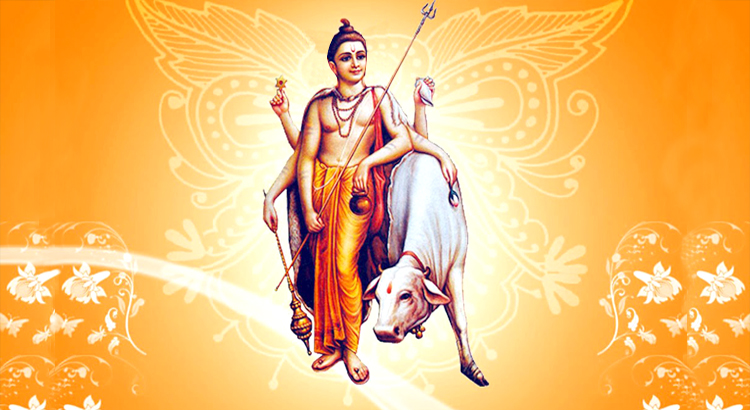
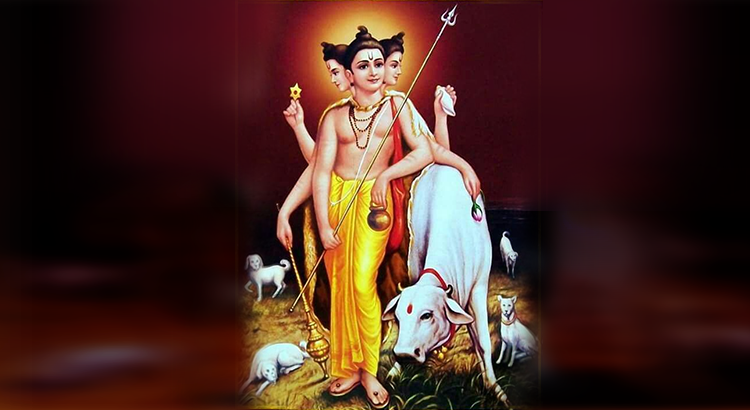
Shree Dattatreya or Shree Datta is a Hindu deity considered to be an avatar of Hindu god Shree Krishna, known as Shree Dattatreya.
The name Dattatreya is composed of two words - “Datta” (meaning given) and “Atreya”, referring to the sage Atri, his physical father.
Various Hindu sects worship him differently, though Shree Dattatreya is considered a form of all the three deities. He is especially considered an avatar of Vishnu while his siblings the moon-god Chandra and the sage Durvasa are regarded as forms of Brahma and Shiva respectively. However, spiritual seekers pray to this Supreme Teacher for knowledge of the Absolute Truth. Hindu theology, credits Dattatreya as the author of the Tripura Rahasya given to Parashurama, a treatise on Advaita Vedanta. He is specially worshipped on his birthday, Datta Jayanti.

Shree Dattatreya traditions
  • Puranic tradition
  • Mahanubhav tradition
  • Shri Gurucharitra tradition
  • Sakalmat Sampradaya tradition
  • Avadhut Panth tradition
  • Shri Dattpith Sansthan Pathri

One who is in possession of all six of these opulences at the same time and who possesses them to an unlimited degree is understood to be the Supreme Personality of Godhead according to Parasara Muni a great Vedic authority.
Shree Dattatreya was born to the sage Atri, who had been promised by Parameshvara (the Almighty), that He, Parameshvara, would be incarnated as his son. Some Hindu sects familiar with the trinity also attribute Shree Dattatreya's incarnation as of all the three- Vishnu, Shiva and Brahma, indirectly meaning to be all powerful and above all. This is just one of the many legends related to the birth of Lord Dattatreya. Others suggest a more mystical origin of Shree Dattatreya. Some of the sources claim that he was born in Kashmir jungles near the sacred Amarnath.

Appearance Puranic tradition
मालाकमंडलुरधः करपद्मयुग्मे, मध्यस्थ पाणियुगुले डमरूत्रिशूले
यस्यस्त उर्ध्वकरयोः शुभशंखचक्रे वंदे तमत्रिवरदं भुजषटकयुक्तम
I bow to the one who has six hands and whose lowest two hands have maalaa and kamandalu, middle pair of hands hold damaru and trishool and top two hands have holy Shankh and Chakra) Other depictions, however, show other weapons like 'Gada' in the hands of Dattatreya sometimes.

Names of Shri Datta & their meanings:
🚩 Datta >> Datta is one who has been bestowed with the spiritual experience of the nirgun? (Nonmaterialised), meaning, the one who has been given the experience that the 'Self' is Brahman (God in His aspect as the Creator of the universe) or mukta (Liberated) self or the soul.
🚩 Avadhut >> One whose (spiritual) ignorance has been dispelled with spiritual knowledge, meaning, the one who emancipates all.
🚩 Dattatreya >> This word is derived from Datta and Atreya. The meaning of 'Datta' has already been explained above. 'Atreya' means the son of Sage Atri.
🚩 Digambar >> Is the principle which gives company to an embodied soul till it gets Final Liberation in the radiance of the sky, i.e. beyond all the directions.
🚩 Shripad >> 'Shri' is the never-ending principle of God. The principle that takes an embodied soul to that principle of God or to the Holy Feet of 'Shri' principle, is the Datta principle in Shripad.
🚩 Vallabh >> The Datta principle in the form of Vallabh protects the Universe from the circular-shaped negative energies that create fear psychosis, and thus protects the embodied souls.

🙏 जय श्री कृष्ण जी 🙏
Read more
Why we serve 56 types of cuisines to Lord Shree Krishna

Why we serve 56 types of cuisines...

🙏 Dandvat Pranam 🙏

Why we serve 56 types of cuisines to Lord Shree Krishna.
Great glory is behind this. For these 56 types of cuisines, the fifty-six is called enjoyment. The enjoyment starts with yoghurt dumplings, rice, whole, papad and this ends with the last element of bhog as cardamom. It is also said that Maiya Yashoda Ji use to serve eight times food in a day to the Bala Krishna. Here is the story of the 56 type of cuisines bhog or 56 bhog.

To protect the Govardhana parvat from the wrath of Indra, Lord Shree Krishna lifted up the Govardhana for the seven consecutive days without the food and water. Shree Krishna just stood beneath the Parvat and all the people of the village are under the parvat. On eight day, when Lord Shree Krishna said, rain is over now you can go outside. All the people of the village are feeling sad for the thing that Bal Krishna survived for the 7 days without any food for the sake of villages. They are speechless and overwhelmed with the feeling towards Bala Krishna. Then the Maiya Yasodha and the villagers just decided to make happy Lord Krishna with the 56 bhogs and show their love to the lord.

The logic behind the 56 bhog is:
7 Days and 8 times food serving in a day (7 day X 8 times bhog = 56 bhog)
According to Shrimad Bhagwat Githa, Gopikaon does not only dawn to bathe in the Yamuna, even they desired to receive the husband like the Nand Kumar Bala Krishna. Lord Krishna consented to the fulfillment of their wishes. To mark the end of fasting and wishes to complete, the served the Lord with 56 bhog.
There are 6 bhog and 56 Sakhian enjoyment… It is also said that Lord Krishna and Radhika are living on a sacred lotus in Gulok. Behind the speciality of rose, there is a fact also. The first layer consists of three layers of lotus “eight”, the second in “sixteen” and third in “thirty-two petals”. On the each petal there is a Sakhi residing and in the middle of these petals lord is residing. Thus the total number of petals is 56. This is the meaning of the number 56.

These 56 types of cuisines to Lord Shree Krishna are as below:
1. भक्त (भात) 2. सूप (दाल) 3. प्रलेह (चटनी) 4. सदिका (कढ़ी)
5. दधिशाकजा (दही शाक की कढ़ी) 6. सिखरिणी (सिखरन) 7. अवलेह (शरबत) 8. बालका (बाटी)
9. इक्षु खेरिणी (मुरब्बा) 10. त्रिकोण (शर्करा युक्त) 11. बटक (बड़ा) 12. मधु शीर्षक (मठरी)
13. फेणिका (फेनी) 14. परिष्टïश्च (पूरी) 15. शतपत्र (खजला) 16. सधिद्रक (घेवर)
17. चक्राम (मालपुआ) 18. चिल्डिका (चोला) 19. सुधाकुंडलिका (जलेबी) 20. धृतपूर (मेसू)
21. वायुपूर (रसगुल्ला) 22. चन्द्रकला (पगी हुई) 23. दधि (महारायता) 24. स्थूली (थूली)
25. कर्पूरनाड़ी (लौंगपूरी) 26. खंड मंडल (खुरमा) 27. गोधूम (दलिया) 28. परिखा
29. सुफलाढय़ा (सौंफ युक्त) 30. दधिरूप (बिलसारू) 31. मोदक (लड्डू) 32. शाक (साग)
33. सौधान (अधानौ अचार) 34. मंडका (मोठ) 35. पायस (खीर) 36. दधि (दही)
37. गोघृत 38. हैयंगपीनम (मक्खन) 39. मंडूरी (मलाई) 40. कूपिका (रबड़ी)
41. पर्पट (पापड़) 42. शक्तिका (सीरा) 43. लसिका (लस्सी) 44. सुवत
45. संघाय (मोहन) 45. संघाय (मोहन) 47. सिता (इलायची) 48. फल
49. तांबूल 50. मोहन भोग 51. लवण 52. कषाय
53. मधुर 54. तिक्त 55. कटु 56. अम्ल


🙏 जय श्री कृष्ण जी 🙏
Read more
Mahasthan Sarpadwaypathan Sthan, when two snakes had fallen on the Sarvadnya Shree Chakradhar Swami Ji

Mahasthan Sarpadwaypathan Sthan, ...

🙏 Dandvat Pranam 🙏

Mahasthan Sarpadwaypathan Sthan (Wadner-Bhujang) सर्पद्वयपतन स्थान (वडनेर-भुजंग) as all of the Mahanuvhava Panth members know that Sarpadwaypathan Sthan is the one of the Mahasthan in our culture. Sarpadwaypathan Sthan is at the north direction of the Anjangaon – Kakada road at Wadner-Bhujang village. The leela is explained below.

Bhagwan Sarvadnya Shree Chakradhar Swami Ji came from Achapur town via Katesokarne to Wadner village. Swami Ji came here at evening time. Sawami Ji was going to Wateshwar temple to have a sleep. At the same time, the Priest was returning from the temple after the worship. The Priest told Sarvadnya that the temple has been locked to save the ornaments from the theft, so he asked Sarvadnya that he can sleep at the Uttareshwar temple opposite side of the road.

So Swami Ji came at this temple. There were 2 snakes living at the temple who were bitter enemies to each other. At mid night, when Sarvadnya was in between sleep snakes were fighting with each other. Suddenly both of them had fallen on Swami Ji’s chest while fighting with each other. Then Sarvadnya held those 2 snakes in both the hands and make them apart by throwing the Snake at right side to the left and the snake at Left side to the Right. Since that time, those 2 snakes stayed there leaving all the hate and disputes. At this Mahasthan temple, there is a beautiful idol of Sarvandnya Shree Chakradhar Swami Ji holding the two snakes in both the hands.

Sarvadnya Shri Chakradhar Temple:
▫️ Sarpadway Patan Sthan, Anjangaon - Kakada Road,
▫️ Village: Wadner-Bhujang, Block: Achalpur,
▫️ District: Amravati, State: Maharashtra, India

🙏 जय श्री कृष्ण जी 🙏
Read more
What is Karma: Action or Deed

What is Karma: Action or Deed

🙏 Dandvat Pranam 🙏

Karma is a Sanskrit term. It means action or deed. Any physical or mental action is Karma. Thinking is mental Karma. Karma is the sum total of our acts, both in the present life and in the preceding births.

Karma means not only action, but also the result of an action. There is a hidden power in Karma or action termed 'Adrishta' which brings in fruits of Karmas for the individual. The consequence of an action is really not a separate thing. It is a part of the action and cannot be divided from it.

According to the Gita, any action done with Nishkamya Bhava (selflessness) is Karma.
Lord Krishna says: Work incessantly. Your duty is to work but not to expect the fruits thereof. The central teaching of the Gita is non-attachment to work. Breathing, eating, seeing, hearing, thinking, etc., are all Karmas. Thinking is real Karma. Raga-dvesha (likes and dislikes) constitute real karma.

🙏 जय श्री कृष्ण जी 🙏
Read more
Daily rituals of Prabhu Shree Dattatreya

Daily rituals of Prabhu Shree Dat...

🙏 Dandvat Pranam 🙏

Shree Dattatreya - The Universal Guru. He had descended on this earth to establish three things and beliefs
1. Satya – The Universal Truth.
2. Rta – The Cosmic Order.
3. Dharma – The perennial principles.
Prabhu Shree Datta have numbers of leelas, we cant even count them. Here i'm trying to describe the daily life routine of Shree Datt parbhu in few lines. Hope all you will appreciate and share with the communities. From the start of day to end.
  • 1. Meru Mountain, Uttarakhand – Prabhu G used to reside at Meru mountain.
  • 2. Varanasi, Bihar – Prabhu G always take bathe on Ghats of Ganga, Varanasi, Bihar at early morning. Most listened leela of prabhu g is sanan at Ganga ghat. He always do check of his loving people at morning time on the walk to Varanasi.
  • 3. Kurukshetra, Haryana – Prabhu G used to Sipping water at the Kurukshetra
  • 4. Pandharpur – Shree Datta prabhu G always do the chandan tilak prakriya at Pandharpur.
  • 5. Kedar – Prabhu G always do devotional japp at Kedar also called morning sandhya.
  • 6. Kedar – Prabhu G partake Vibhuti/Bhasma (ash) at Kedar after the morning sandhya.
  • 7. Girnar, Saurashtra, Gujarat – Prabhu G always do meditation in Girnar, Saurashtra, Gujarat.
  • 8. Kolhapur, Maharashtra – One of most famous routine of Prabhu G is bhiksha in the Kolhapur, Maharashtra area after the noon.
  • 9. Panchaleshwar, Maharashtra – Agin one of most famous and listed leela of Prabhu Shree Datt is takin lunch after bhiksha on the banks of Godavari river.
  • 10. Marathwada, Maharashtra – After having luch, Prabhu G use to take roll of betel leaves in Rakshasbhuvan, District Beed, Marathwada, Maharashtra.
  • 11. Raivat Mountain, Gujarat, India – Prabhu G takes some rest and Raivat Mountain (Girnar).
  • 12. Western Ocean, Bharat – Prabhu Shree Dattatray g after having the rest always spend his time at the western part of Bharat. Generally at the ocean head.
  • 13. Naimisharanya, Bihar – Shree Datt prabhu G spend his most of time to hear discourses and kirtans at Naranarayan Ashram in Naimisharanya, Bihar.
  • 14. Mahurgad, Maharashtra – At the end of day Prabhu G takes the sleep at the Sahyaparvat in Nanded, Maharashtra.
All these prakriyas are taken from the part of leelas done by prabhu ji.

Teachings of Shree Dattatreya Maharaj
Prabhu Ji gave Ashtanga Yoga (eight fold path of Yoga) to the world thousands of years ago.
1. Yama – non-killing, truthfulness, non-stealing, continence, and non-receiving of any gifts. Moral discipline.
2. Niyama – cleanliness, contentment, austerity, study and self-surrender to God. Moral discipline Yama and Niyama are moral training and form the basis of Yoga. As these two become established, the Yogi will begin to realize the fruits of his practice.
3. Asana – posture.
4. Pranayama – ‘Prana’ is the life-force, ‘yama’ is control. ‘Pranayama’ consists of breath control exercises.
5. Pratyahara – withdrawal of senses from sense objects.
6. Dharana – concentration.
7. Dhyana – meditation.
8. Samadhi – the transcendental or super conscious state of being one with God: Principle.

🙏 जय श्री कृष्ण जी 🙏
Read more