




Piercing fish eye

Piercing fish eye
  • Author: Dandvat
  • Posted on: 2017-07-31 08:00:00
  • Tags: Shree Krishna Prabhu, Knowing Mahanubhav Pantha, Bhagavad Gita, Teaching Arjuna
  • Post ID: 1501468200

🙏 दंडवत प्रणाम
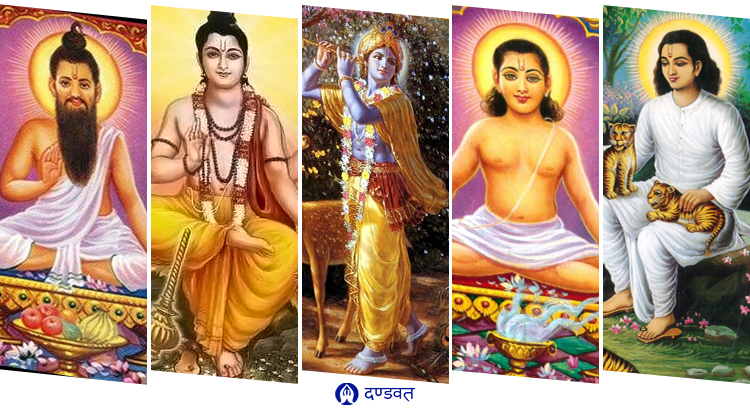
नमो पंच कृष्ण अवतार


📰 Blogs

नमो पंच कृष्ण अवतार - Read the blogs of Mahanubhava Pantha. Go to Blogs

Leela Charitar is the literature defining the life of the Lord Shree Chakardhara Swami

Leela Charitar is the literature ...

🙏 Dandvat Pranam 🙏

Maharashtra the epicenter. While touring the omniscient Lord Shree Chakardhara Swami Ji arrived in Maharashtra and created a number of leelas, because of these reasons this is a place of pilgrimage in Maharashtra. To learn more about these mystrical leelas of Lord Shree Chakardhara you will read the book entitled “Leela Charitar”. Beside this, the pujniey guru ji or the Mahatmas will help you to understad this Mahan Granth.

The followers of Lord Shree Chakardhara Swami Ji are Nagadevacarya, Maimabhatta, Baisa and Mahadaisa. These have taken the charge to direct the bhagats after the departure of the Lord towards the North direction.

Now, for the promotion and cultivation of the pantha, the Shree MadBhagwad Gita is the prime cult. Leela Charitar is the literature defining the life of the Lord Shree Chakardhara Swami.

Few of the most important literature of Pantha are as below:
🌸 Rukhmini Swayambar - Narendra Bhatt (1292).
🌸 Shisupala Vadh - Bhaskar Bhat Borikara (1312).
🌸 Uddhava Gita - Bhaskar Bhat Borikara (1313).
🌸 Sayhyadrivarnana - Ravalobasa (1353).
🌸 Riddhapura Varnanan - Narayanabasa (1418).
🌸 Vacchaharanam - Damodhara Pandit (1316).
🌸 Gyaan Prabodha - Vishwanath Balapurkar (1418).

Literatures of Mahanubhava Pantha are too famous in the Marathi Language and in the history of Marathi it is too vast.
The first biographer, sutrakara, grammarian, the first commentator, mahabhasyakara, writer, first sastratikara, the first prameyakara, the first stanza creator, the first bandakara. This is not the end, the very forst Poet of the Marathi is even from the Mahanubhava Pantha. Similarly in this way the people of Mahanubhava Pantha have played tremendous role in the history of Marathi and Maratha Samaj.

🙏 जय श्री कृष्ण जी 🙏
Read more
Bhagavad Gita - A way for Life

Bhagavad Gita - A way for Life

🙏 Dandvat Pranam 🙏

The Bhagavad Gita, which is a treasure house of Dharma, not only for Hindus but for all mankind. The Gita teaches us better concentration, overcoming anger, self-control, the art of right action, true happiness, devotion and so on.

Valuable learnings from Bhagavad Gita:
1️⃣ Delusion arises from anger. The mind is bewildered by delusion. Reasoning is destroyed when the mind is bewildered. One falls down when reasoning is destroyed.
2️⃣ One can become whatever one wants to be if one constantly contemplates on the object of desire with faith.
3️⃣ Fear not what is not real, never was and never will be. What is real, always was and cannot be destroyed.
4️⃣ You grieve for those who are not worthy of grief, and yet speak the words of wisdom. The wise grieve neither for the living nor for the dead.
5️⃣ The evil doers, the ignorant, the lowest persons who are attached to demonic nature, and whose intellect has been taken away by Maya do not worship or seek Me.

🙏 जय श्री कृष्ण जी 🙏
Read more
Sthans and presence of Parmeshwar avatar of Mahanubhav Pantha

Sthans and presence of Parmeshwar...

🙏 Dandvat Pranam 🙏

Ubhaydarshi avatar having relation with any of the inertness and the place are sacred. These sacred place and objects have the two special forces 1. Maya Samarthya Shakti and 2. Kripa Shakti. In the Sathan the Maya Samarthya (माया सामर्थ्य) is President and the Anushangik (आनुषांगिक) is Subsidiary. But where the blessing of the god is present, where the Parmeshwar avatar (Ubhaydarshi avatar) have taken the stand for the sufficient days are having the Anushangik (आनुषांगिक) as President and Maya Samarthya (माया सामर्थ्य) as Subsidiary.

Classifications of Sthan
Since the Parmeshwara avatar is having the numbers of competency, but the major one is Kripa Shakti and Kripa Shakti develops at own. The places and the Sathans are divided according to the categories of time. The time spent by the Parmeshawar avatar on the places make them the sacred places and the Sathan. In our Mahanubhav Pantha the Sathan is the one of the most sacred thing.

Aasan Sthan – आसनस्थान
The sthan where the Parmeshwar avatar have taken rest for few hours. Hours may vary from 5 to 7 hours. This is the first type of Sthan. Sthan is blessed with the powers of the Parmeshwar Shakti. Making pilgrimage of the Sthan’s is the culture of Mahanubhav Pantha.

Charan Chari – चरणचारि
Places where the Parmeshwar avatar have been standing without the slippers and the wooden Paduka (पादुका). There might be reasons behind this, but the footprints and the places is very sacred for the Mahanubhav Panth.

Vasti Sthan – वसति स्थान
Prameshwar avatar are always on the way to help people to attain Moksha and set them free from their sins and previous Karmas. In between the time, they have taken rest for one night. This makes the Sathan as Vasti Sthan. Our Panch avatar’s are always flowing from one to another place.

Kudi Vasti – कुड़ी वसति
Kudi Vasti is similar to the Vasti Sthan, the difference is that in the Vasti Sthan the time period is only one night, but the Kudi Vasti is having the one day two nights or two day two nights. This is how the Vasti Sthan and Kudi Vasti are different.

Sthan – स्थान
Sthan, now here we come with the same thing but the different time period. Here the Parmeshwar avatar have slept for there to five days. The place is more sacred as compare to the Kudi Vasti. Sthan is the most common word used, but the Sthans are divided too.

Avasthan – अवस्थान
Avasthan, here we have the time period of five to nine days. Here the Parmeshwar avatar blessed the sacred place with more presence.

Mahasthan – महास्थान
Mahasthan, finally this is the last and the most blessed sacred place. The time period is more than the nine days, this might be 1 month, 2 months, 6 months and even in the years. The Mahasthan is where the Parmeshwar avatar have been living and making the people aware about the Bliss (Moksha) and ways to attain Moksha.

॥ जय सर्वज्ञ श्री चक्रधर ॥

बिना भाग्य जो वस्तु ईश्वर अवतार देते है वह लिला ज्ञान कहलाता है।
अवतार के सम्बन्ध से जो फल प्राप्त होता है वह सम्बन्ध दान कहलाता है।
जीवो के कर्मों को ग्रहण कर उन्हे सीघ्रता से भुगवाने को ग्रहणा दान कहते है।
और ईश्वर स्वरूप की प्राप्ती होना यह कैवल्य दान कहते है।
ईस प्रकार ईश्वर की ओर से ये चार प्रकार के दान दिये जाते है।
॥ दंडवत प्रणाम ॥

🙏 जय श्री कृष्ण जी 🙏
Read more
Shree Astamasiddhi Devasthan Vihir Pur, Charanankit sthans of two parmeshwar avatar

Shree Astamasiddhi Devasthan Vihi...

🙏 Dandvat Pranam 🙏

Astamasiddhi Devasthan is the Charanankit Stan of Shri Govind Prabhu and Sarvadnya Shri Chakradhar Swami. At this holy place there are two Charanankit sthans, one is charanankit by Shree Gundam Raul Prabju Ji and other is by Sarvadnya Shri Chakradhar Swami Ji.

This place is also called as “Vihir Pur” (विहीरपूर) since here exists an ancient well with Holy water. It is said that the water of this well have some magical impulse. On taking bath here you will get rid of your disease and it will make the body healthy. The healing, curing power of the water is the blessing of Parmeshwar. Thousands of people visit here and take the holy bath here. People across the states and cities come here for the pilgrimage.

Sarvadnya Shri Chakradhar Swami Ji spent 3 nights here in a tent and then went to Achalpur as requested by Ramdarna Raja. From Ridhhapur it is at about 30KM.

Astamasiddhi Devasthan Temple:
▫️ Vihir Pur, 4KM from the Paratwada town,
▫️ Paratwada-Amravati Road,
▫️ District: Amravati, State: Maharashtra, India

🙏 जय श्री कृष्ण जी 🙏
Read more
Shree Mad Bhagavad Gita one of the holy books of Hinduism and Mahanubhava

Shree Mad Bhagavad Gita one of th...

🙏 Dandvat Pranam 🙏

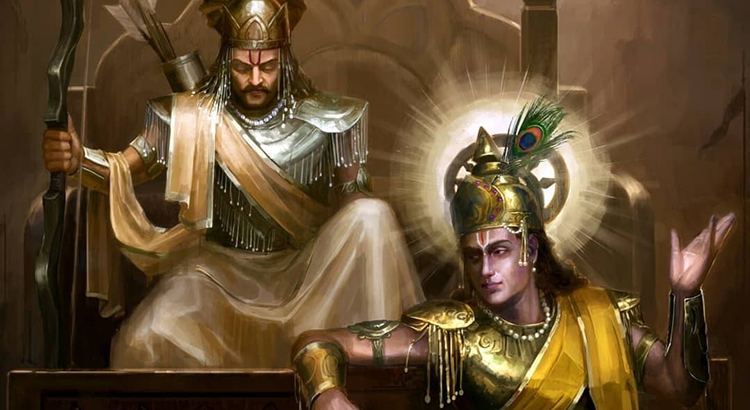
Shree Mad Bhagavad Gita one of the holy books of Hinduism. Shree Mad Bhagavad Gita is written thousands of years ago consists of 18 chapters. It is the samvad of Lord Shree Krishna and the Dhanusdhardi Arjuna. Shree Mad Bhagavad Gita is freely offering this presentation of Sri Mad Bhagavad Gita to the Earth as a gift to humanity. The date of the Kurukshetra war and the delivery of Bhagavad Gita to Arjuna by Sri Krishna are supposed to be around 3139 BCE.
There are three paths which lead directly to establishing a relationship with God. According to the authority of Shree Mad Bhagavad Gita these paths have been designated as
1. The yoga of perfect actions.
2. The yoga of perfect devotion.
3. The yoga of perfect knowledge.

Shree Mad Bhagavad Gita text is organized in twelve Skandhas (books) subdivided into 332 Adhyayas (chapters), and has between 16,000 to 18,000 verses, depending on the manuscript version. Of the 12 books, it is the 10th book with about 4,000 verses that has been the most popular, studied and recognized. The text asserts that it is Krishna in literary form.
Each chapter is called a yoga. Yoga is the science of the individual consciousness attaining communion with the Ultimate Consciousness. So each chapter is a highly specialized yoga revealing the path of attaining realization of the Ultimate Truth. The first six chapters have been classified as the Karma Yoga section as they mainly deal with the science of the individual consciousness attaining communion with the Ultimate Consciousness through actions.

These chapters are:
Attharah adhaya of Shree Mad Bhagavad Gita

1. Arjuna–Visada Yoga Prathama adhaya
Arjuna has requested Krishna to take his rath between the two armies, where he can see to who were in his opposition and who were with him . His growing dejection is described as he fears losing his friends and relatives as a consequence of Yudh.

2. Sankhya Yoga Dwitiya adhaya
After asking Shree Krishna for help, Shree Krishna teched him the Karma yoga, Gyaana yoga, Sankhya yoga, Buddhi yoga and the immortal nature of the soul Atma amar hai, ise koi nhi maar skta.. Sankhya Yog nam Dwitiya adhaya here refers to one of six orthodox schools of the Hindu Philosophy. This chapter is often considered the gyaan of the entire Shree Mad Bhagavad Gita.

3. Karma Yoga Tritiya adhaya
Shree Krishna explains how the Karma yoga – Performance of prescribed duties, but without attachment to results, is the appropriate course of action for Arjuna. Shree Krishna teached him how Karma will take him to the purification of soul.

4. Gyaana–Karma-Sanyasa Yoga Chaturth adhaya
Shree Krishna exposed that, he has lived through many births through prarambh of Universe. Always teaching yoga for the protection of the pious and the destruction of the impious and stresses the importance of accepting a guru. Shree Krishna teach him to remove the shanshya from his mind and approach to Karma.

5. Karma–Sanyasa Yoga Pancham adhaya
Arjuna asks Lord Shree Krishna if it is better to forgo action or to act. The Lord Shree Krishna answers that both are ways to the same goal but that acting in Karma yoga is superior. Arthat Prabhu shared Gyaan and Karam yoga both take him to Mokash, but Karam yoga is superior to Gyan yoga.

6. Atmasanyam Yoga Shasht adhaya
Krishna describes the Ashtanga yoga. Then, further throw light on the difficulties of the mind. How to gain the stable state of mind where nobody can influence you and the techniques by which mastery of the mind might be gained. Then your warrior will help you to understand the difference between Moah and Prem.

7. Gyaana Vigyaana Yoga Saptam adhaya
Vasudev Shree Krishna describes the absolute reality and its illusory energy Maya. Prabhu said this world is all his Maya, the illusion. People are tied to this world and Maya, they can’t see beyond this illusion. Those who can, for them there is no thing hidden.

8. Aksara Brahma Yoga Ashtam adhaya
This chapter contains eschatology of the Shree Mad Bhagavad Gita. Prabhu said, life is all about the 84 lacs births that a person take to reach this human body and the difference between death and life.

9. Raja Vidya Raja Guhya Yoga Navam adhaya
Lord Krishna explains Raja Vidya or Raja Guhya refers only to the Suddha bhakti yoga. Shree Bhagavan accepts that which is offered by the suddha bhaktas with love. In the last sloka in this chapter (man mana bhava mad-bhaktah), it is concluded that bhakti is the only means to attain Shri Bhagavan.

10. Vibhuti Vistara Yoga Dasham adhaya
Shree Krishna is described as the ultimate cause of all thee Jeev and Atma, Prabhu said without Paramatma, Atma and Jeev wouldn’t be single. Arjuna accepts Shree Krishna as the Supreme power.

11. Visvarupa Darsana Yoga Gyarawah adhaya
Arjuna requested Lord Shree Krishna to show him his Visvarupa, the Universal Avatar. Later Arjuna says, Prabhu your this avatar is of a being facing every way and emitting the radiance of a thousand suns, containing all other beings and material in existence. You are the Universe, there is nothing beyond you. You are the only GOD to worship.

12. Bhakti Yoga Barwah adhaya
Lord Shree Krishna reveals the path of devotion and worshio to God. Krishna describes the process of devotional service Bhakti yoga. He also explains different forms of spiritual disciplines and yoga process to attain the peace and learn the way to God.

13. Ksetra Ksetrajna Vibhaga Yoga Terwan adhaya
The difference between transient perishable physical body and the immutable eternal soul is described. Prabhu descirbed the difference between actual and the perceptual. Then LordShree Krishna tells about the nature of problem and its solution.

14. Gunatraya Vibhaga Yoga Choudwan adhaya
Prabhu SHree Krishna explains the three modes (Gunas) of material nature pertaining to goodness, passion, and nescience. The sankalpa of Prabhu is thus the instrumental cause of creation, and his Illusion Maya becomes the material cause. This Maya has three Gunas – the Sattva, Rajas & Tamo Gunas.

15. Purusottama Yoga Pandrwan adhaya
Lord Shree Krishna identifies the transcendental characteristics of God such as, Omnipotence, Omniscience, and Omnipresence. Lord Shree Krishna also describes a symbolic tree representing material existence. “Creation, with its Eternal as well as ephemeral aspects, can be likened to the Ashwattha tree which has its roots above and branches below. the Vedas are its leaves. He who fully comprehends the nature of this tree truly understands.”

16. Daivasura Sampad Vibhaga Yoga Solwan adhaya
Vasudev Shree Krishna identifies the human traits of the Divine (Sure) and the Evil (Asure) natures. He counsels that to attain the supreme destination one must give up lust, anger, greed, and discern between right and wrong action by discernment through Buddhi and evidence from the scriptures.

17. Sraddhatraya Vibhaga Yoga Satarwan adhaya
Lord Shree Krishna qualifies the three types of Faith, Thoughts, Deeds and even Eating habits corresponding to the three modes (gunas). These 3 type of Gunas are – the Sattva, Rajas & Tamo Gunas.

18. Moksha Sanyasa Yoga Attharwan adhaya
Here finally God the Vasudev Shree Krishna gives the conclusions of previous seventeen chapters. Then again, Prabhu asks Arjuna to abandon all forms of Dharma, fix your mind on me, be devoted to me, perform sacrifice and simply follow his gyan and be the part of Dharam Yudh. I promise, (since) you are dear to me.

🙏 जय श्री कृष्ण जी 🙏
Read more
Three gates leading to the hell of self destruction: Bhagavad Gita, Chapter XVI, Verses 21

Three gates leading to the hell o...

🙏 Dandvat Pranam 🙏

|| त्रिविधं नरकस्येदं द्वारं नाशनमात्मन: ||
|| काम: क्रोधस्तथा लोभस्तस्मादेतत्त्रयं त्यजेत् ||
|| tri-vidhaṁ narakasyedaṁ dvāraṁ nāśhanam ātmanaḥ ||
|| kāmaḥ krodhas tathā lobhas tasmād etat trayaṁ tyajet ||

There are three gates leading to the hell of self-destruction for the soul - lust, anger, and greed.

Therefore, all should abandon these three:
  • Lust (Kama): Beyond just physical desire, this represents an obsessive craving for sensory gratification. It creates a cycle of never enough, leading to frustration when the high inevitably fades.
  • Anger (Krodha): Often the byproduct of frustrated desire. When we don't get what we want, anger flares up, destroying our ability to think rationally and damaging our relationships.
  • Greed (Lobha): The bottomless pit. It convinces us that our worth is tied to what we possess, ensuring we remain eternally dissatisfied regardless of our success.
Source: Bhagavad Gita, Chapter XVI, Verses 21.

🙏 जय श्री कृष्ण जी 🙏
Read more