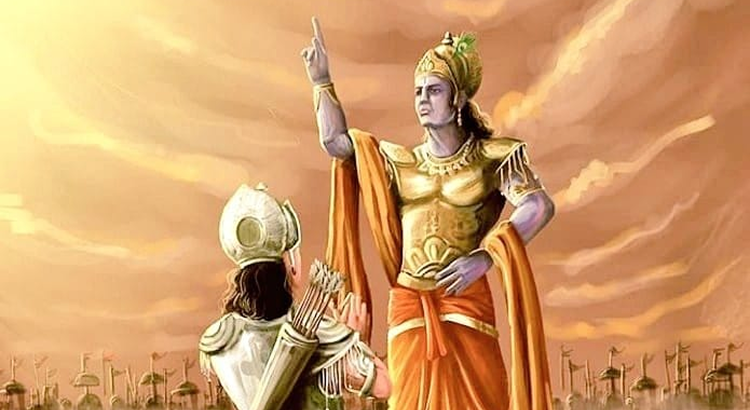





Yoga of wisdom and realization: Bhagvad Gita, Chapter VII, Verses 8-12

Yoga of wisdom and realization: Bhagvad Gita, Chapter VII, Verses 8-12
  • Author: Dandvat
  • Posted on: 2017-07-16 08:00:00
  • Tags: Shree Krishna Prabhu, Mahanubahv Panch Avatar, Mahanubhav Panth Literature, Rituals of Mahanubhav Pantha, Knowing Mahanubhav Pantha
  • Post ID: 1500172200

🙏 दंडवत प्रणाम
नमो पंच कृष्ण अवतार


📰 Blogs

नमो पंच कृष्ण अवतार - Read the blogs of Mahanubhava Pantha. Go to Blogs

Place and time of birth of our five incarnations of Mahanubhav Pantha

Place and time of birth of our fi...

🙏 Dandvat Pranam 🙏

Place and time of birth of our five incarnations of Mahanubhav Pantha or Jai Krishni Pantha or Achyuta Pantha.
Sarvadnya Shree Chakradhar Swami told to his pantha that the lord takes avatars in all four Yugas (Krutayuga, Tretayuga, Dwaparyuga, Kaliyuga). Same was said by Shree Krishna in Shree Bhagavad Gita: “Dharma Sansthaapnaarthay Sambhavaami Yuge Yuge”. Accordingly, there is not a time in this world when an avatar is absent.
Mahanubhav Pantha teaches that Krishna is the only God in Universe.

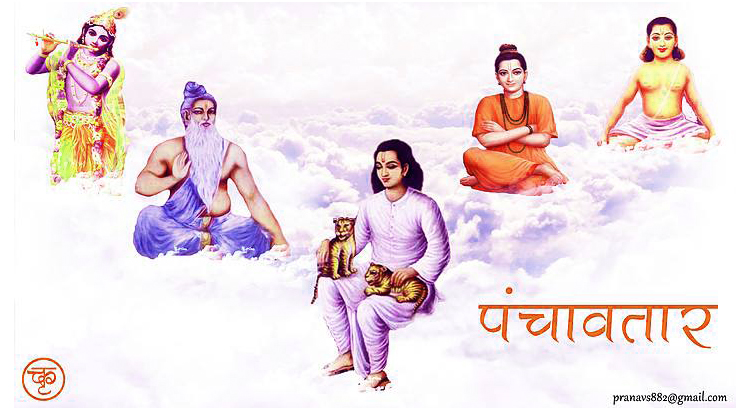
The Five incarnations of God knows as Pancha Krishna or Five Krishnas or Namo Panch Krishna Avatar:

1. Lord Shree Krishna Maharaj
- Place of birth: Mathura detention (Prison) Uttar Pradesh
- Time of birth: Shravan Krishna paksha eighth night at 12 pm (Wednesday)

2. Lord Shree Dattatreya Maharaj
- Place of birth: Bdrikashram Uttrakhand (Himalayas)
- Time of birth: Margshis Shukla Chaturdashi at 4 AM (Friday)

3. Lord Shree Chakrapani Maharaj
- Place of birth: Phalatan district Satara (Maharashtra)
- Time of birth: Asivan ninth waning at 5 am (Thursday)

4. Lord Shree Govind Prabhu
- Place of birth: Katsur Ridhpur (Maharashtra)
- Time of birth: 10 pm Tryodshi Bhadrapad Shukla (Tuesday)

5. Sarvadnya Shree Chakradhar Swami
- Place of birth : Bharuch, (Gujarat)
- Birth Time : 2 pm second Bhadrapad Shukla (Friday)

🙏 जय श्री कृष्ण जी 🙏
Read more
Bhakti is blessed as per your Karma of previous birth

Bhakti is blessed as per your Kar...

🙏 Dandvat Pranam 🙏

Even person is great by his Karma not by his Birth.
Lord Shree Krishna in Shree Madbhagwad Geta said that Bhakti is blessed as per your Karma of previous birth. Even person is great by his Karma not by his Birth. Person do known by his nobleness and behavior. We are blessed with the human body such that we can make ourselves get rid of this illusionary world by devoting ourselves to lord without any greed.

Since this world is completely surrounded by the sins and uncertainity. The desire towards the happiness is the dark part of knowledge. To remove this darkest part from each and every mind, In the todays world we all need to spread and cultivate the seed of Shree Madbhagwad Geta. Today we all are too far from the knowledge of Shree Madbhagwad Geta. Due to this, the world is surviving from the chaos, miss conception and the greed. To make the life good and free from all these chaos. We need to devote ourselves completely to Parmeshwra, recite and take in the knowledge from the Shree Madbhagwad Geta and Bharamvidya Shashtra.

There is a well explained sentence from one of the Great Saint of Mahanubhava Pantha / Jai Krishni Pantha / Achyuta Pantha
“गरुड़ पक्षी आकाश में ऊँचा उड़ता है, परंतु अन्य पक्षी यदि गुरुड़ पक्षी की तरह ऊँचे आकाश में नहीं उड़ सकते है तो क्या बाकि पक्षी उड़ना छोड़ दें ?”
So the message is that everybody must try best according to his power, ability and knowledge to promote and serve the Dharma.

श्री कृष्ण भगवान जी ने श्री मदभगवद गीता में कहा है, आप करम करें, करम के फल के विषेय में न सोचें। दुःख - सुख, यश - अपयश, सफलता - असफलता जीवन के अंग है। अर्थार्थ जीवन के साथ साथ सभ चलता रहता है। रात - दिन, सुबह - शाम संसार का एक अनिवार्य भाग है। जो आपके ना चाहने पर भी आप पर पप्रभाब अवश्य छोड़ेंगे। अतः हमे केवल निःसवार्थ भाव पूर्वक करम करना चाहिए।

🙏 जय श्री कृष्ण जी 🙏
Read more
Three gates leading to the hell of self destruction: Bhagavad Gita, Chapter XVI, Verses 21

Three gates leading to the hell o...

🙏 Dandvat Pranam 🙏

|| त्रिविधं नरकस्येदं द्वारं नाशनमात्मन: ||
|| काम: क्रोधस्तथा लोभस्तस्मादेतत्त्रयं त्यजेत् ||
|| tri-vidhaṁ narakasyedaṁ dvāraṁ nāśhanam ātmanaḥ ||
|| kāmaḥ krodhas tathā lobhas tasmād etat trayaṁ tyajet ||

There are three gates leading to the hell of self-destruction for the soul - lust, anger, and greed.

Therefore, all should abandon these three:
  • Lust (Kama): Beyond just physical desire, this represents an obsessive craving for sensory gratification. It creates a cycle of never enough, leading to frustration when the high inevitably fades.
  • Anger (Krodha): Often the byproduct of frustrated desire. When we don't get what we want, anger flares up, destroying our ability to think rationally and damaging our relationships.
  • Greed (Lobha): The bottomless pit. It convinces us that our worth is tied to what we possess, ensuring we remain eternally dissatisfied regardless of our success.
Source: Bhagavad Gita, Chapter XVI, Verses 21.

🙏 जय श्री कृष्ण जी 🙏
Read more
Past and Present - perceptions of mind: Bhagvad Gita, Chapter V, Verses 14

Past and Present - perceptions of...

🙏 Dandvat Pranam 🙏

Question : Did Lord Krishna say anything about?
Why do we take birth, if we have to die later?
That is a million dollar question, without any clear cut logical answer.

1. Only thing Lord Krishna said is that people take birth due to their past karmic debts incurred during their last birth (incarnation).
2. Each of us are responsible for our birth. God has nothing to do with that.
3. We continue this cycles of birth and death, until we exhaust all our karmic debt and then we attain salvation.
4. Lord Krishna said: God does not decide what each person should do, nor he induce people to act, nor does he create fruits of any action.

Each person acts according to his/her Vasanas (Past and present perceptions of mind)

Source: Bhagavad Gita, Chapter V, Verses 14.

🙏 जय श्री कृष्ण जी 🙏
Read more
Shree Mad Bhagavad Gita one of the holy books of Hinduism and Mahanubhava

Shree Mad Bhagavad Gita one of th...

🙏 Dandvat Pranam 🙏

Shree Mad Bhagavad Gita one of the holy books of Hinduism. Shree Mad Bhagavad Gita is written thousands of years ago consists of 18 chapters. It is the samvad of Lord Shree Krishna and the Dhanusdhardi Arjuna. Shree Mad Bhagavad Gita is freely offering this presentation of Sri Mad Bhagavad Gita to the Earth as a gift to humanity. The date of the Kurukshetra war and the delivery of Bhagavad Gita to Arjuna by Sri Krishna are supposed to be around 3139 BCE.
There are three paths which lead directly to establishing a relationship with God. According to the authority of Shree Mad Bhagavad Gita these paths have been designated as
1. The yoga of perfect actions.
2. The yoga of perfect devotion.
3. The yoga of perfect knowledge.

Shree Mad Bhagavad Gita text is organized in twelve Skandhas (books) subdivided into 332 Adhyayas (chapters), and has between 16,000 to 18,000 verses, depending on the manuscript version. Of the 12 books, it is the 10th book with about 4,000 verses that has been the most popular, studied and recognized. The text asserts that it is Krishna in literary form.
Each chapter is called a yoga. Yoga is the science of the individual consciousness attaining communion with the Ultimate Consciousness. So each chapter is a highly specialized yoga revealing the path of attaining realization of the Ultimate Truth. The first six chapters have been classified as the Karma Yoga section as they mainly deal with the science of the individual consciousness attaining communion with the Ultimate Consciousness through actions.

These chapters are:
Attharah adhaya of Shree Mad Bhagavad Gita

1. Arjuna–Visada Yoga Prathama adhaya
Arjuna has requested Krishna to take his rath between the two armies, where he can see to who were in his opposition and who were with him . His growing dejection is described as he fears losing his friends and relatives as a consequence of Yudh.

2. Sankhya Yoga Dwitiya adhaya
After asking Shree Krishna for help, Shree Krishna teched him the Karma yoga, Gyaana yoga, Sankhya yoga, Buddhi yoga and the immortal nature of the soul Atma amar hai, ise koi nhi maar skta.. Sankhya Yog nam Dwitiya adhaya here refers to one of six orthodox schools of the Hindu Philosophy. This chapter is often considered the gyaan of the entire Shree Mad Bhagavad Gita.

3. Karma Yoga Tritiya adhaya
Shree Krishna explains how the Karma yoga – Performance of prescribed duties, but without attachment to results, is the appropriate course of action for Arjuna. Shree Krishna teached him how Karma will take him to the purification of soul.

4. Gyaana–Karma-Sanyasa Yoga Chaturth adhaya
Shree Krishna exposed that, he has lived through many births through prarambh of Universe. Always teaching yoga for the protection of the pious and the destruction of the impious and stresses the importance of accepting a guru. Shree Krishna teach him to remove the shanshya from his mind and approach to Karma.

5. Karma–Sanyasa Yoga Pancham adhaya
Arjuna asks Lord Shree Krishna if it is better to forgo action or to act. The Lord Shree Krishna answers that both are ways to the same goal but that acting in Karma yoga is superior. Arthat Prabhu shared Gyaan and Karam yoga both take him to Mokash, but Karam yoga is superior to Gyan yoga.

6. Atmasanyam Yoga Shasht adhaya
Krishna describes the Ashtanga yoga. Then, further throw light on the difficulties of the mind. How to gain the stable state of mind where nobody can influence you and the techniques by which mastery of the mind might be gained. Then your warrior will help you to understand the difference between Moah and Prem.

7. Gyaana Vigyaana Yoga Saptam adhaya
Vasudev Shree Krishna describes the absolute reality and its illusory energy Maya. Prabhu said this world is all his Maya, the illusion. People are tied to this world and Maya, they can’t see beyond this illusion. Those who can, for them there is no thing hidden.

8. Aksara Brahma Yoga Ashtam adhaya
This chapter contains eschatology of the Shree Mad Bhagavad Gita. Prabhu said, life is all about the 84 lacs births that a person take to reach this human body and the difference between death and life.

9. Raja Vidya Raja Guhya Yoga Navam adhaya
Lord Krishna explains Raja Vidya or Raja Guhya refers only to the Suddha bhakti yoga. Shree Bhagavan accepts that which is offered by the suddha bhaktas with love. In the last sloka in this chapter (man mana bhava mad-bhaktah), it is concluded that bhakti is the only means to attain Shri Bhagavan.

10. Vibhuti Vistara Yoga Dasham adhaya
Shree Krishna is described as the ultimate cause of all thee Jeev and Atma, Prabhu said without Paramatma, Atma and Jeev wouldn’t be single. Arjuna accepts Shree Krishna as the Supreme power.

11. Visvarupa Darsana Yoga Gyarawah adhaya
Arjuna requested Lord Shree Krishna to show him his Visvarupa, the Universal Avatar. Later Arjuna says, Prabhu your this avatar is of a being facing every way and emitting the radiance of a thousand suns, containing all other beings and material in existence. You are the Universe, there is nothing beyond you. You are the only GOD to worship.

12. Bhakti Yoga Barwah adhaya
Lord Shree Krishna reveals the path of devotion and worshio to God. Krishna describes the process of devotional service Bhakti yoga. He also explains different forms of spiritual disciplines and yoga process to attain the peace and learn the way to God.

13. Ksetra Ksetrajna Vibhaga Yoga Terwan adhaya
The difference between transient perishable physical body and the immutable eternal soul is described. Prabhu descirbed the difference between actual and the perceptual. Then LordShree Krishna tells about the nature of problem and its solution.

14. Gunatraya Vibhaga Yoga Choudwan adhaya
Prabhu SHree Krishna explains the three modes (Gunas) of material nature pertaining to goodness, passion, and nescience. The sankalpa of Prabhu is thus the instrumental cause of creation, and his Illusion Maya becomes the material cause. This Maya has three Gunas – the Sattva, Rajas & Tamo Gunas.

15. Purusottama Yoga Pandrwan adhaya
Lord Shree Krishna identifies the transcendental characteristics of God such as, Omnipotence, Omniscience, and Omnipresence. Lord Shree Krishna also describes a symbolic tree representing material existence. “Creation, with its Eternal as well as ephemeral aspects, can be likened to the Ashwattha tree which has its roots above and branches below. the Vedas are its leaves. He who fully comprehends the nature of this tree truly understands.”

16. Daivasura Sampad Vibhaga Yoga Solwan adhaya
Vasudev Shree Krishna identifies the human traits of the Divine (Sure) and the Evil (Asure) natures. He counsels that to attain the supreme destination one must give up lust, anger, greed, and discern between right and wrong action by discernment through Buddhi and evidence from the scriptures.

17. Sraddhatraya Vibhaga Yoga Satarwan adhaya
Lord Shree Krishna qualifies the three types of Faith, Thoughts, Deeds and even Eating habits corresponding to the three modes (gunas). These 3 type of Gunas are – the Sattva, Rajas & Tamo Gunas.

18. Moksha Sanyasa Yoga Attharwan adhaya
Here finally God the Vasudev Shree Krishna gives the conclusions of previous seventeen chapters. Then again, Prabhu asks Arjuna to abandon all forms of Dharma, fix your mind on me, be devoted to me, perform sacrifice and simply follow his gyan and be the part of Dharam Yudh. I promise, (since) you are dear to me.

🙏 जय श्री कृष्ण जी 🙏
Read more
Twenty Four Gurus of Lord Shree Dattatreya - Avadhoot Prabhu

Twenty Four Gurus of Lord Shree D...

🙏 Dandvat Pranam 🙏

Lord Shree Dattatreya said
I have taken shelter of twenty-four gurus, who are the following: the earth, air, sky, water, fire, moon, sun, pigeon and python; the sea, moth, honeybee, elephant and honey thief; the deer, the fish, the dancing girl Pingala, the kurari bird and the child; the young girl, arrow maker, serpent, spider and wasp…
Srimad Bhagavatam: Canto 11: Chapter 7: Slokas 33~35
1. Prithvi (Earth) One should acquire the virtues of endurance and tolerance of duality from the earth. The Earth teaches course of Dharma, art of Tolerance, art of Performing Duty.
2. Vaayu (Air) One should be detached like the wind. The Wind being pure and odourless in its characteristics, move freely among all objects and yet remain unaffected. Calm and ever flowing without any fear.
3. Aakash (Sky) Just like the sky one should be single and steady. Like sky, the Soul is omnipresent, all-pervading, and infinite in nature.
4. Jall (Water) Just like water one should behave with affection towards all. Never be partial to anyone. The sage is like water because he is free from all impurities, gentle in nature and while speaking he creates a beautiful vibration like the flowing of water.
5. Agni (Fire) Like the fire one should behave with equality towards all. The sage's glory is like the fire, is made brighter by austerities, his knowledge and tapas; having no vessel other than his stomach.
6. Chandar (Moon) There are in all sixteen phases of the moon including the subtle phase of the new moon and the fifteen of the fortnight. Though there is waxing and waning of the moon, it remains unaffected by them. Sage should not be affected by the continual change of body from birth to death including diseases and old age.
7. Surya (Sun) The sun stores water taking the future into account and benevolently showers it on the earth at the appropriate moment. Similarly the sage can accept material things with his senses, but at the appropriate time he should give these things back, as an act from sense of duty. Without getting attached to material sense objects.
8. Kabootar (Pigeon) Like pigeon story warns against developing obsessive love or attachments in the transient material world. The sage would refrain from attachment after attaining the human body, which is the open door to Mukti (Moksha, Liberation), a door to God-Realization.
9. Ajgar (Python) Ajgar eats whatever comes in its way and satisfy, whether it is sufficient or not, bitter or sweet etc. A sage always goes for search of wisdom and refrains from running after unwanted pleasures.
10. Samudra (Ocean) One should not let anyone perceive one's virtues just as the sea keeps its length, breadth, depth and the treasures in its bed hidden from everyone. However one should always utilise them favourably, for the sake of others. The life of sage remains balanced; the joys of life do not excite him, nor do sorrows depress him. The wise sage never transgresses the highest standards of morality.
11. Patanga (Moth) Similarly a foolish man is enticed by the illusory pleasures of the visual senses and thus gets caught in the ceaseless cycles of birth and death. Man must try to control the sense of sight (and all other senses) and to try to avoid being greedy.
12. Madhu Mskhee (Honey Collector) Just as the one who collects the honey acquires it effortlessly so also a male seeker should partake of food cooked in the home of a householder instead of spending time in making a fire, collecting utensils, firewood, etc. Thus learning that accumulation of wealth leads to sudden death like the honey bee, one should stop amassing wealth.
13. Haathi (Elephant) Men allured by adulterous women are destroyed in the same way as elephants overcome with lust die fighting amongst themselves.
14. Mdhumakkhee (Bumble Bee) Just as the bumble-bee savours the fragrance of several sunflowers instead of one so also seekers desirous of Liberation should realise that every science will not be easy to grasp and hence should try to understand their implied meaning.
15. Hiran (Musk Deer) The deer is very fond of music and is very much attracted by it. The deer is trapped by hunter through its love for music. Hunter employs music to lure the deer before hunting it. A renounced person should never become attracted by mundane sounds like sensuous music, specially the sweet singing and dancing of girl.
16. Machli (Fish) When a fish-hook fastened with bait is thrown into the water, the fish lured by the bait swallows the hook and gets caught. Thus it loses its life. So one should never lose sight of his True Self.
17. Pingala (A Dancing Girl) One night despite a long wait not a single client approached her. As she restlessly waited pacing up and down, hoping for a client she was finally bored and suddenly developed detachment. The abandonment of expectation from people, leads to contentment and infinite joy.
18. Pakshee (Lapwing) Seeing the lapwing fly with a fish in its beak hundreds of crows and eagles began chasing it, pecking at it and tried to snatch the fish, thus harassing it. This flock began following it wherever it went. In this world there is peace only if sense objects are rejected, otherwise it leads to great distress.
19. Balak (Child) Live like being child at heart, innocent, care free and full of Supreme Joy.
20. Churiyaan (Bangles) When two bangles strike each other a jingling sound is generated. The more the bangles the greater is the sound. Similarly when two persons live together it leads to conversation and when many persons live together there is strife. In both circumstances there is no peace of mind. Hence those doing meditation, yoga, etc. should search for an isolated place and live there in seclusion.
21. Shilpkar (Artisan) One day an artisan was chiselling the blade of an arrow with great concentration. A king's procession to the accompaniment of music passed by that way. A man arriving later approached the artisan and enquired, “Have you seen the king's procession passing by this way, just now?” The artisan replied, “I was so engrossesd in my work that I was not aware of anything”. Just like this artisan a seeker desirous of Liberation (mumukshu) should meditate surrendering all his sense organs to The Lord.
22. Saanp (Snake) The snake lives alone and avoids the company of other creatures. In order to seek Self-Realization, one should abide in the cave of his own heart. The snake leaves of its old skin after sometime, and gets the newer one; that make resemblance with phenomenon of death. A true sage never frightened by the death, knowing sooner or later he will get a new life based on his karmic actions.
23. Makadi (Spider) The spider spins a web secreting a fluid from its belly and plays in it day and night. When it feels like it, it swallows the entire web and becomes free again. Lord Supreme creates material universe from His Maya, preserves it and after a while draws it back into the Self. The Supreme Self has no desires and is beyond the reach of cause and effect.
24. Bhringee Keet (Caterpillar, Wasp) The wasp catches hold of a worm (caterpillar), put it in its hive (nest), gives it a sting and goes on buzzing about it. The caterpillar is so frightened by this whole ongoing process of buzzing. As a man thinks, so he becomes. Even at the time of death, whatever one's mind focused on, one attains the same living species form in his next life.
Thus one must try to give up all attachment to the body and attain Moksha or liberation.
Shree Dattatreya explains what he has learned from his own body as a Guru My Body teaches me Gyaan (knowledge) and Vairaagya (detachment). Birth and death are along with it. It means that if we hold on to this body then we have to bear sorrows. Although it helps to think about Tattwa (elements) still I never consider it mine.

🙏 जय श्री कृष्ण जी 🙏
Read more