




Bhakti is blessed as per your Karma of previous birth

Bhakti is blessed as per your Karma of previous birth
  • Author: Dandvat
  • Posted on: 2017-01-16 08:00:00
  • Tags: Mahanubhav Pantha, Shree Krishna Prabhu, Bhagavad Gita, Mahanubahv Panch Avatar, Mahanubhav Panth Literature, Knowing Mahanubhav Pantha
  • Post ID: 1484533800

🙏 दंडवत प्रणाम
नमो पंच कृष्ण अवतार


📰 Blogs

नमो पंच कृष्ण अवतार - Read the blogs of Mahanubhava Pantha. Go to Blogs

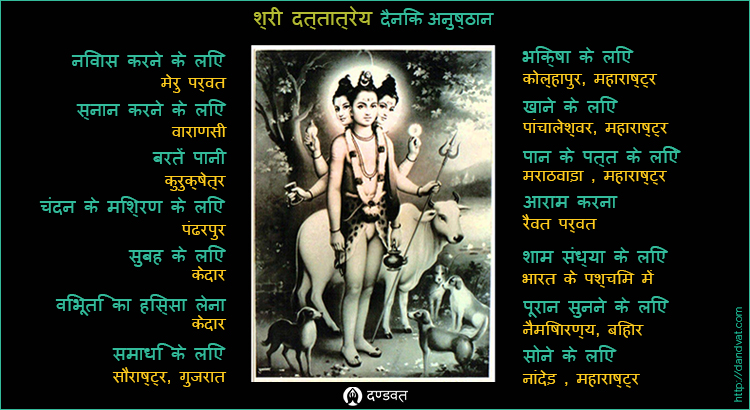
Daily rituals of Prabhu Shree Dattatreya

Daily rituals of Prabhu Shree Dat...

🙏 Dandvat Pranam 🙏

Shree Dattatreya - The Universal Guru. He had descended on this earth to establish three things and beliefs
1. Satya – The Universal Truth.
2. Rta – The Cosmic Order.
3. Dharma – The perennial principles.
Prabhu Shree Datta have numbers of leelas, we cant even count them. Here i'm trying to describe the daily life routine of Shree Datt parbhu in few lines. Hope all you will appreciate and share with the communities. From the start of day to end.
  • 1. Meru Mountain, Uttarakhand – Prabhu G used to reside at Meru mountain.
  • 2. Varanasi, Bihar – Prabhu G always take bathe on Ghats of Ganga, Varanasi, Bihar at early morning. Most listened leela of prabhu g is sanan at Ganga ghat. He always do check of his loving people at morning time on the walk to Varanasi.
  • 3. Kurukshetra, Haryana – Prabhu G used to Sipping water at the Kurukshetra
  • 4. Pandharpur – Shree Datta prabhu G always do the chandan tilak prakriya at Pandharpur.
  • 5. Kedar – Prabhu G always do devotional japp at Kedar also called morning sandhya.
  • 6. Kedar – Prabhu G partake Vibhuti/Bhasma (ash) at Kedar after the morning sandhya.
  • 7. Girnar, Saurashtra, Gujarat – Prabhu G always do meditation in Girnar, Saurashtra, Gujarat.
  • 8. Kolhapur, Maharashtra – One of most famous routine of Prabhu G is bhiksha in the Kolhapur, Maharashtra area after the noon.
  • 9. Panchaleshwar, Maharashtra – Agin one of most famous and listed leela of Prabhu Shree Datt is takin lunch after bhiksha on the banks of Godavari river.
  • 10. Marathwada, Maharashtra – After having luch, Prabhu G use to take roll of betel leaves in Rakshasbhuvan, District Beed, Marathwada, Maharashtra.
  • 11. Raivat Mountain, Gujarat, India – Prabhu G takes some rest and Raivat Mountain (Girnar).
  • 12. Western Ocean, Bharat – Prabhu Shree Dattatray g after having the rest always spend his time at the western part of Bharat. Generally at the ocean head.
  • 13. Naimisharanya, Bihar – Shree Datt prabhu G spend his most of time to hear discourses and kirtans at Naranarayan Ashram in Naimisharanya, Bihar.
  • 14. Mahurgad, Maharashtra – At the end of day Prabhu G takes the sleep at the Sahyaparvat in Nanded, Maharashtra.
All these prakriyas are taken from the part of leelas done by prabhu ji.

Teachings of Shree Dattatreya Maharaj
Prabhu Ji gave Ashtanga Yoga (eight fold path of Yoga) to the world thousands of years ago.
1. Yama – non-killing, truthfulness, non-stealing, continence, and non-receiving of any gifts. Moral discipline.
2. Niyama – cleanliness, contentment, austerity, study and self-surrender to God. Moral discipline Yama and Niyama are moral training and form the basis of Yoga. As these two become established, the Yogi will begin to realize the fruits of his practice.
3. Asana – posture.
4. Pranayama – ‘Prana’ is the life-force, ‘yama’ is control. ‘Pranayama’ consists of breath control exercises.
5. Pratyahara – withdrawal of senses from sense objects.
6. Dharana – concentration.
7. Dhyana – meditation.
8. Samadhi – the transcendental or super conscious state of being one with God: Principle.

🙏 जय श्री कृष्ण जी 🙏
Read more
Brahmvidya Shastra and Nav Prakaran to learn the four elements Ishwar, Devta, Jeev & Prapanch

Brahmvidya Shastra and Nav Prakar...

🙏 Dandvat Pranam 🙏

Brahmvidya Shastra, It is a collection of main vachans (sutras) of Swami Shree Chakardhara and presents the philosophical core of Mahanubhav Pantha. Very well planned and carefully organized into various sections, it is revered as our Shastra mop Parmeshwar (God in the form of scripture).

Compiled with great care and understanding (in 1290) by the knowledgeable Keshav Vyas Suri from amongst 1500 episodes in the sacred source book Leela Charitra, is the second sacred book Brahmvidya Shastra.

The Brahmvidya Shastra gives minute details of four elements (Char Paddarths- Ishwar, Devta, Jeev & Prapanch), Gods and the varied knowledge, way and source of attaining them. Nav Prakaran means nine chapters. Excluding the background chapter of Poorvi (along with Panch Krishna and Panch Naam).

Nav Prakaran:
🚩 Anya Vyavriti – अन्य व्यावृति (देवता पदार्थ)
🚩 Yug Dharma – युगधर्म
🚩 Vidya Marg – विद्या मार्ग
🚩 Sanhaar – संहार (प्रलय)
🚩 Sansaran – संसरण (रचना)
🚩 Udharan – उद्धरण
🚩 Mahavakya – महावाक्य
🚩 Nirvachan – निर्वचन
🚩 Astipari – असतिपरि

Other parts of Brahmvidya are Vichar Prakaran and Achar Prakaran. There are 285 sutras under Vichar Prakaran and 289 sutras under Achar Prakaran. Keshav Vyas Suri also selected from Leela Charitra 114 drishtants (illustrations) which were narrated by Swami to elaborate some deep philosophical thought. If this is included, Nav Prakaran becomes Dasham Prakaran.

🙏 जय श्री कृष्ण जी 🙏
Read more
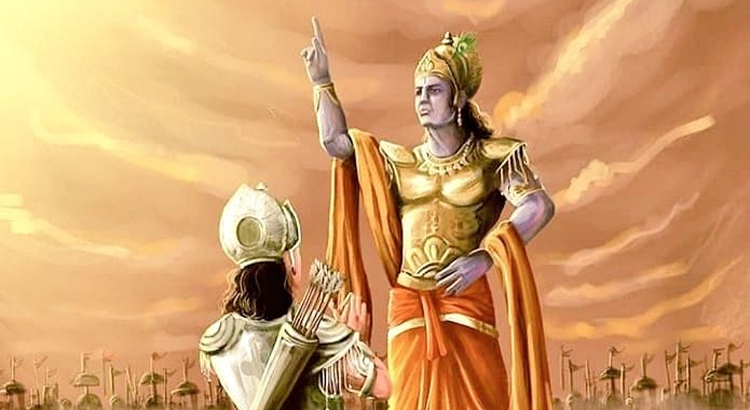
Surrender everything to me, I am the God: O Arjuna: Bhagavad Gita, Chapter XVIII, Verses 66

Surrender everything to me, I am ...

🙏 Dandvat Pranam 🙏

Lord Shree Krishna said that during the last chapter since, he exhausted all other advice to Arjuna regarding:
1. Jnana Yoga: The path of external renunciation, where outside activity is given up in pursuit of inner enquiry.
2. Karma Yoga: It purifies the mind. It leads one to consider dharma of work, and the work according to one's dharma, doing god's work.
3. Raja Yoga: It does emphasize the importance of self-control, meditation, and inner discipline, which are core principles of Raja Yoga, and discusses various yogic paths including Karma Yoga, Bhakti Yoga, and Jnana Yoga.

Sarva-Dharman parityajya mam ekam sharanam vraja aham tvam sarva-papebhyo mokshayishyami ma shuchah.

Lord Krishna said: Abandon all Dharma (duties) and just surrender unto me (the will of God). I shall deliver you from all bonds of Karma. Do not fear.

Source: Bhagavad Gita, Chapter XVIII, Verses 66.

🙏 जय श्री कृष्ण जी 🙏
Read more
Shree Dattatreya, the guru to the entire universe – Vishwa Guru - SMARTHRUGAAMI

Shree Dattatreya, the guru to the...

🙏 Dandvat Pranam 🙏

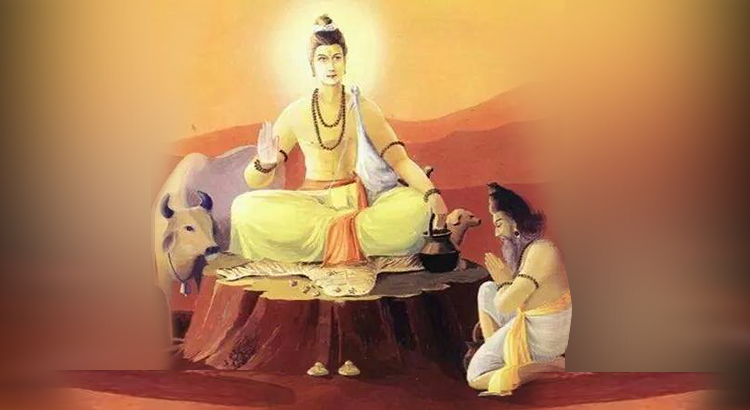
Behind all names and forms is the one nameless, formless Essence. Behind all governors is the one Supreme Governor of governors. Behind all lights is the one Light Of lights. Behind all sounds, there is the soundless Supreme Silence. Behind all teachers is the one Supreme Guru of Gurus and that is only Jagad Guru SHREE DATTATREYA.

The two letters of DA and TTA means “DATTA” nama smarana, Datta nama sankeerthan, Datta nama dhyaana only will give Paramardha to every life. He is “BHUKTHI, MUHTHI PRADAATHA” which means, he will always sanction Sukha in this Loka and also in Paraloka. . Hence the Datta sadhaks can lead the superb Materialistic and Spiritualistic life. Miraculous growth and life settlement of Children/Generations of Datta Sadhaks can be seen . This is Permanant (SHAASWATHA) , True (SATHYA) and Happy (AANANDA).

Prabhu Dattatreya tatwa is AVYAKTHA, NIRGUNA, NIRAAKAARA, NIRANJANA, NISHKRIYA, PARABRAHMA, SAGUNA SWAROOPA and it is SHREEMANNARAAYANA, PARAMESHA TATWA. The Upanishads are clearly telling that, “DATTA VEEJASTHAM JAGATH SARVAM”. This means that total Universe is Prabhu Datta swaroopa. Nothing is beyond him.
Lord Dattatreya, is the important Diety in the Indian Spiritual Panorama and very important in MAHANUBHAV. His personality integrates the elements of the three Gods, Brahma, Vishnu and Maheshwara. Shree Dattatreya is also the guru to the entire universe – Vishwa Guru.

He taught:
  • 1. Srividya to Parashurama
  • 2. Dattavidya to Brahma
  • 3. Adhyatma Vidya to Prahlada
  • 4. Yoga Vidya to Vasishta and
  • 5. Atma Vidya to Kartaviryarjuna

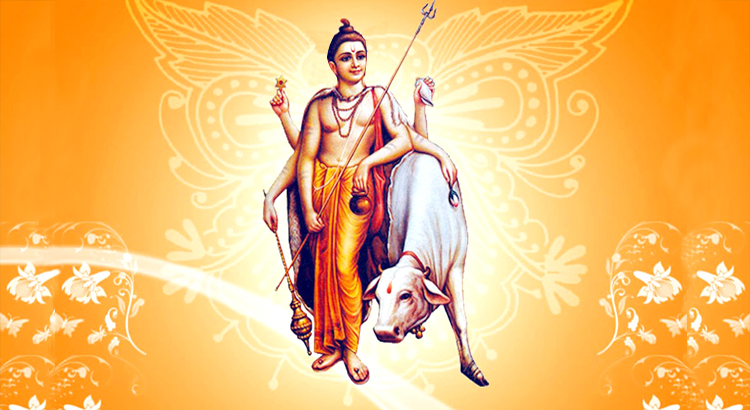
He also incarnated as Sri Sripada Vallabha and Sri Nrsimha Saraswati in the age of Kali to uphold Dharma. The trinity represent his three faces, his body is pure chit, the six branches of knowledge are his six hands, the four dogs are the four Vedas, the cow is Dharma, universal peace is the Oudumbara tree and the great incarnation of Brahman, complete with sixteen kalas, which is a personification of the knowledge of the Self – is the unfathomable Murti of Sri Dattatreya. Sri Dattareya is an ocean of compassion. By merely remembering his name, one earns his grace. Hence he is called “SMARTHRUGAAMI” – one who immediately appears to the devotee who remembers the Lord. A sage called Dalaadana once wanted to test the truth in this statement and remembered Dattatreya.

It is my very nature to reach that person who remembers me, instantly. Whether with devotion or not, if a man remembers me sincerely, I will instantly reach him and grant his desires – This is Shree Dattareya’s sacred promise to us, his children.
Also, the other unique quality of Sri Dattareya is that he is – BHAKTA KEERTHI VIVARDHANA – he is more interested in showcasing the glory of his devote than of his own. This is yet another example of his immeasurable grace towards his devotees.

The Upanishads Avadhutopanishad and Jaabaaldarshanopanishad mention that the philosophy is given by Shri Dattatreya. Upanishads and Puranas are openly telling and Guru avatharas are guiding us to recite Datta Nama Smaran. Dattaguru is always ready on his toes to reach those who remember him and shower his unbounded blessings on them. Come forward and recognize him and join his mission by serve him in the propagation of Datta Nama to make your materialistic life easy and create your path to reach the stage of SALVATION by glorifying the Glory of Lord Dattatreya.

What does purans says
  • 1. The Bhagavata-purana and the Markandeya-purana, are the most authoritative sources on the Dattatreya-avatara and they identify Him exclusively with Lord Vishnu.
  • 2. Atreh patny anasuuyaa triin~ jajn~e suyashasah sutaan dattam duurvaasasam somam aatmesha-brahma- sambhavaan (Srimad Bhagavatam 4.1.15).
  • 3. The Vishnu-dharmottara Purana describes in great detail the iconographic details of the avatara-s of Lord Vishnu and here is the reference for Sri Dattatreya.
  • 4. Brahmanda Purana says–“Lord Dattatreya gave the memory of Vedas to the Vedamurthy Sree Brahma Deva Himself.
  • 5. The Upanishads Avadhutopanishad and Jaabaaldarshanopanishad mention that the philosophy is given by Shri Dattatreya.
  • 6. Upanishads and Puranas are openly telling and Guru avatharas are guiding us to recite Datta Nama Smaran.

Shri Dattaguru is always ready on his toes to reach those who remember him and shower his unbounded blessings on them. Come forward and recognize him and join his mission by serve him in the propagation of Datta Nama to make your materialistic life easy and create your path to reach the stage of SALVATION by glorifying the Glory of Lord Dattatreya.

🙏 जय श्री कृष्ण जी 🙏
Read more
Twenty Four Gurus of Lord Shree Dattatreya - Avadhoot Prabhu

Twenty Four Gurus of Lord Shree D...

🙏 Dandvat Pranam 🙏

Lord Shree Dattatreya said
I have taken shelter of twenty-four gurus, who are the following: the earth, air, sky, water, fire, moon, sun, pigeon and python; the sea, moth, honeybee, elephant and honey thief; the deer, the fish, the dancing girl Pingala, the kurari bird and the child; the young girl, arrow maker, serpent, spider and wasp…
Srimad Bhagavatam: Canto 11: Chapter 7: Slokas 33~35
1. Prithvi (Earth) One should acquire the virtues of endurance and tolerance of duality from the earth. The Earth teaches course of Dharma, art of Tolerance, art of Performing Duty.
2. Vaayu (Air) One should be detached like the wind. The Wind being pure and odourless in its characteristics, move freely among all objects and yet remain unaffected. Calm and ever flowing without any fear.
3. Aakash (Sky) Just like the sky one should be single and steady. Like sky, the Soul is omnipresent, all-pervading, and infinite in nature.
4. Jall (Water) Just like water one should behave with affection towards all. Never be partial to anyone. The sage is like water because he is free from all impurities, gentle in nature and while speaking he creates a beautiful vibration like the flowing of water.
5. Agni (Fire) Like the fire one should behave with equality towards all. The sage's glory is like the fire, is made brighter by austerities, his knowledge and tapas; having no vessel other than his stomach.
6. Chandar (Moon) There are in all sixteen phases of the moon including the subtle phase of the new moon and the fifteen of the fortnight. Though there is waxing and waning of the moon, it remains unaffected by them. Sage should not be affected by the continual change of body from birth to death including diseases and old age.
7. Surya (Sun) The sun stores water taking the future into account and benevolently showers it on the earth at the appropriate moment. Similarly the sage can accept material things with his senses, but at the appropriate time he should give these things back, as an act from sense of duty. Without getting attached to material sense objects.
8. Kabootar (Pigeon) Like pigeon story warns against developing obsessive love or attachments in the transient material world. The sage would refrain from attachment after attaining the human body, which is the open door to Mukti (Moksha, Liberation), a door to God-Realization.
9. Ajgar (Python) Ajgar eats whatever comes in its way and satisfy, whether it is sufficient or not, bitter or sweet etc. A sage always goes for search of wisdom and refrains from running after unwanted pleasures.
10. Samudra (Ocean) One should not let anyone perceive one's virtues just as the sea keeps its length, breadth, depth and the treasures in its bed hidden from everyone. However one should always utilise them favourably, for the sake of others. The life of sage remains balanced; the joys of life do not excite him, nor do sorrows depress him. The wise sage never transgresses the highest standards of morality.
11. Patanga (Moth) Similarly a foolish man is enticed by the illusory pleasures of the visual senses and thus gets caught in the ceaseless cycles of birth and death. Man must try to control the sense of sight (and all other senses) and to try to avoid being greedy.
12. Madhu Mskhee (Honey Collector) Just as the one who collects the honey acquires it effortlessly so also a male seeker should partake of food cooked in the home of a householder instead of spending time in making a fire, collecting utensils, firewood, etc. Thus learning that accumulation of wealth leads to sudden death like the honey bee, one should stop amassing wealth.
13. Haathi (Elephant) Men allured by adulterous women are destroyed in the same way as elephants overcome with lust die fighting amongst themselves.
14. Mdhumakkhee (Bumble Bee) Just as the bumble-bee savours the fragrance of several sunflowers instead of one so also seekers desirous of Liberation should realise that every science will not be easy to grasp and hence should try to understand their implied meaning.
15. Hiran (Musk Deer) The deer is very fond of music and is very much attracted by it. The deer is trapped by hunter through its love for music. Hunter employs music to lure the deer before hunting it. A renounced person should never become attracted by mundane sounds like sensuous music, specially the sweet singing and dancing of girl.
16. Machli (Fish) When a fish-hook fastened with bait is thrown into the water, the fish lured by the bait swallows the hook and gets caught. Thus it loses its life. So one should never lose sight of his True Self.
17. Pingala (A Dancing Girl) One night despite a long wait not a single client approached her. As she restlessly waited pacing up and down, hoping for a client she was finally bored and suddenly developed detachment. The abandonment of expectation from people, leads to contentment and infinite joy.
18. Pakshee (Lapwing) Seeing the lapwing fly with a fish in its beak hundreds of crows and eagles began chasing it, pecking at it and tried to snatch the fish, thus harassing it. This flock began following it wherever it went. In this world there is peace only if sense objects are rejected, otherwise it leads to great distress.
19. Balak (Child) Live like being child at heart, innocent, care free and full of Supreme Joy.
20. Churiyaan (Bangles) When two bangles strike each other a jingling sound is generated. The more the bangles the greater is the sound. Similarly when two persons live together it leads to conversation and when many persons live together there is strife. In both circumstances there is no peace of mind. Hence those doing meditation, yoga, etc. should search for an isolated place and live there in seclusion.
21. Shilpkar (Artisan) One day an artisan was chiselling the blade of an arrow with great concentration. A king's procession to the accompaniment of music passed by that way. A man arriving later approached the artisan and enquired, “Have you seen the king's procession passing by this way, just now?” The artisan replied, “I was so engrossesd in my work that I was not aware of anything”. Just like this artisan a seeker desirous of Liberation (mumukshu) should meditate surrendering all his sense organs to The Lord.
22. Saanp (Snake) The snake lives alone and avoids the company of other creatures. In order to seek Self-Realization, one should abide in the cave of his own heart. The snake leaves of its old skin after sometime, and gets the newer one; that make resemblance with phenomenon of death. A true sage never frightened by the death, knowing sooner or later he will get a new life based on his karmic actions.
23. Makadi (Spider) The spider spins a web secreting a fluid from its belly and plays in it day and night. When it feels like it, it swallows the entire web and becomes free again. Lord Supreme creates material universe from His Maya, preserves it and after a while draws it back into the Self. The Supreme Self has no desires and is beyond the reach of cause and effect.
24. Bhringee Keet (Caterpillar, Wasp) The wasp catches hold of a worm (caterpillar), put it in its hive (nest), gives it a sting and goes on buzzing about it. The caterpillar is so frightened by this whole ongoing process of buzzing. As a man thinks, so he becomes. Even at the time of death, whatever one's mind focused on, one attains the same living species form in his next life.
Thus one must try to give up all attachment to the body and attain Moksha or liberation.
Shree Dattatreya explains what he has learned from his own body as a Guru My Body teaches me Gyaan (knowledge) and Vairaagya (detachment). Birth and death are along with it. It means that if we hold on to this body then we have to bear sorrows. Although it helps to think about Tattwa (elements) still I never consider it mine.

🙏 जय श्री कृष्ण जी 🙏
Read more
Story behind the Shree Sarvatirth Temple - Ridhapur

Story behind the Shree Sarvatirth...

🙏 Dandvat Pranam 🙏

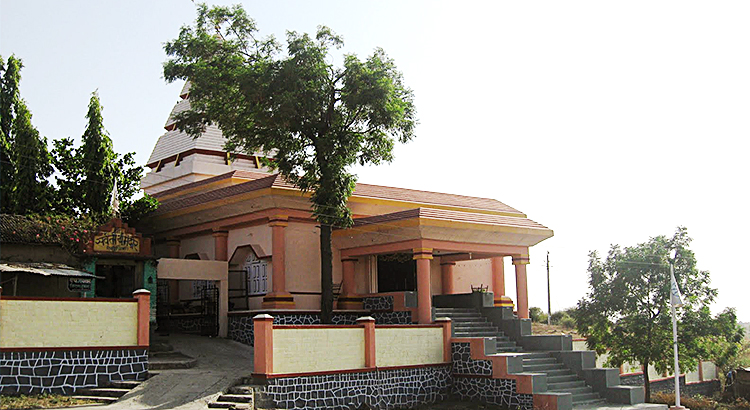
Since we all know about the Shree Rajmath Ridhapur popularly known as The Kashi of Mahanubhav cult. Shree Rajmath Tirath (Ridhapur) is situated in the Morshi Taluka in Amravati District on the Chandur Bazar- Morshi Road. Shree Sarvatirth Temple located at the backside of Rajmath Tirath. Although it’s not a Charankit Sthan of Prabhu Ji but it’s is Mandalik Sthan. There is a story behind this.

During the 13th century, there was a Sant Rajbas. He is very conscious about his routine & he always uses to take food after the pilgrimage of all the Sthans of Shree Ridhapur. Growing with the time & at the older age and illness, he takes 3-4 days to complete pilgrimage of all the Sthans.

One day conditions were too worst, Sant Rajbas had a dream of Prabhu Ji. Shree Gundam Raul Prabhu Ji delivered him a message that “Collect all the Vishesh from all the Sthans & then bring them under one shelter, there you can do your rituals easily”. From that time the area is called as the Shree Sarvatirth Temple.

Shree Sarvatirth Temple:
▫️ Sarvatirth Sthan, Chandur Bazar - Morshi Road,
▫️ Taluka: Morshi, District: Amravati,
▫️ State: Maharashtra, India

🙏 जय श्री कृष्ण जी 🙏
Read more